


MDCAT Biology MCQs

MDCAT Biology MCQs, with every answer explained.

Biology is 81 of the 180 MDCAT MCQs, the biggest single part of your score. Try real past-paper Biology MCQs free, then see every unit and learning outcome PM&DC tests.
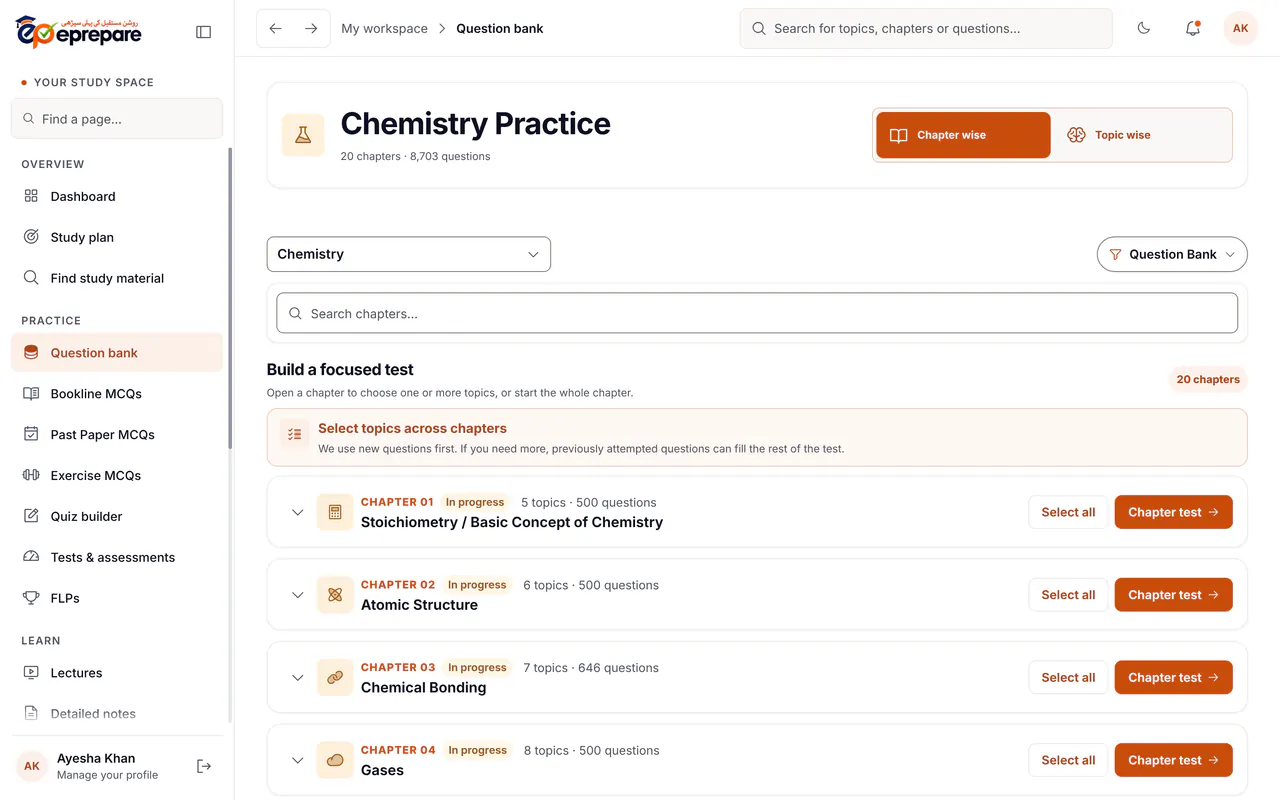
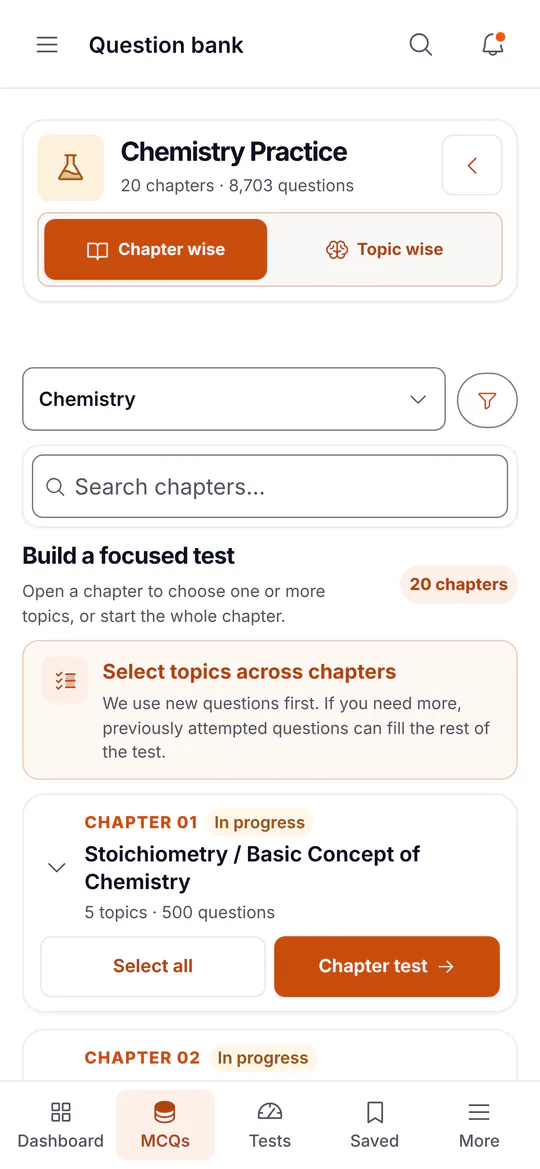
The ePrepare question bank with Biology chapters and MCQ counts

How we teach Biology through MCQs.

Textbook lines matter

Many Biology MCQs come straight from textbook lines and diagrams. Bookline MCQs cover them line by line.

Past-paper Biology

Real KMU, NUMS, UHS and other board Biology MCQs, filed by chapter.

Explained in Urdu too

Every MCQ has an English explanation and an easy Urdu one, with a hint first.

Never repeat a mistake

Wrong Biology MCQs go to your revision list, chapter by chapter.

Try real Biology MCQs, free.

16 Biology MCQs from real KMU and NUMS papers. Take a hint if you are stuck and read every explanation in English or Urdu.

Biology past-paper MCQs

16 real MCQs from KMU MDCAT 2026, NUMS 2026, KMU MDCAT 2025. Free to try.

0/0 correct

Q2 of 180Biology · Immunity
EasyRecallPast paper · KMU MDCAT 2026

A patient diagnosed with AIDS has an increased susceptibility to infections due to:

1 / 16

Biology in the paper.

TestBiology MCQsShare
PM&DC MDCAT (180 MCQs)8145%
NUMS Paper I (150 MCQs)5537%
PM&DC units and outcomes16 units69 learning outcomes

Every Biology unit, and what PM&DC tests.

16 units and 69 learning outcomes from PM&DC's uniform MDCAT curriculum. Open a unit to see its topics and outcomes.

1Acellular life (viruses)2 outcomes

Viruses

  • 1.1Classify viruses on basis of their structure/ number of strands/ diseases/ hosts etc.

AIDS and HIV Infection

  • 1.2Identify symptoms, mode of transmission and cause of viral disease (AIDS)
2Bioenergetics1 outcome

Respiration

  • 2.1Outline the cellular respiration of proteins and fats and correlate these with that of glucose.
3Biological molecules10 outcomes

Biological molecules

  • 3.1Define and classify biological molecules.
  • 3.2Discuss the importance of biological molecules

Biological Importance of Water

  • 3.3Describe biologically important properties of water (polarity, hydrolysis, specific heat, water as solvent and reagent, density, cohesion/ionization)

Carbohydrates

  • 3.4Discuss carbohydrates: monosaccharaides (glucose), oligosaccharides (cane sugar, sucrose, lactose), polysaccharides (starches, cellulose, glycogen)

Proteins

  • 3.5Describe proteins: amino acids, structure of proteins

Lipids

  • 3.6Describe lipids: phospholipids, triglycerides, alcohol and esters (acylglycerol)

Ribonucleic acid (RNA)

  • 3.7Give an account of structure and function RNA

Conjugated molecules

  • 3.8Discuss conjugated molecules (glycol lipids, glycol proteins)

Structure of DNA

  • 3.9Explain the double helical structure of DNA as proposed by Watson and Crick.
  • 3.10Define gene is a sequence of nucleotides as part of DNA, which codes for the formation of a polypeptide.
4Cell structure and function4 outcomes

Cell structure

  • 4.1Compare the structure of typical animal and plant cell

Prokaryotic and Eukaryotic cell

  • 4.2Compare and contrast the structure of prokaryotic cells with eukaryotic cells

Cytoplasmic Organelles

  • 4.3Outline the structure and function of the following organelles: nucleus, Endoplasmic reticulum, Golgi apparatus a Mitochondria

Chromosomes

  • 4.4Describe the structure, chemical composition and function of chromosomes.
5Coordination and control7 outcomes

Receptors

  • 5.1Recognize receptors as transducers sensitive to various stimuli.

Neurons

  • 5.2Explain the structure of a typical neuron (cell body, dendrites, axon and myelin sheath
  • 5.3Define nerve impulse
  • 5.4Classify reflexes
  • 5.5Briefly explain the functions of components of a reflex arc

Brain

  • 5.6Discuss the main parts of the brain (e.g., components of brain stem, mid brain, cerebellum, cerebrum)
  • 5.7Describe the functions of each part.
6Enzymes4 outcomes

Enzymes

  • 6.1Describe the distinguishing characteristics of enzymes

Mode of Enzyme Action

  • 6.2Explain mechanism of action of enzymes

Factors that Affect the Rate of Enzyme Reactions

  • 6.3Describe effects of factor on enzyme action (temperature, pH and concentration)

Inhibitors

  • 6.4Describe enzyme inhibitors
7Evolution3 outcomes

Concept of Evolution

  • 7.1Explain origin of life according to concept of evolution

Lamarckism

  • 7.2Describe the theory of inheritance of acquired characters, as proposed by Lamarck.

Darwinism

  • 7.3Explain the theory of natural selection as proposed by Darwin
8Reproduction3 outcomes

Human Reproductive system

  • 8.1Describe the functions of various parts of the male & female reproductive systems and the hormones that regulate those functions

Menstrual cycle

  • 8.2Describe the menstrual cycle (female reproductive cycle) emphasizing the role of hormones

Sexually transmitted diseases

  • 8.3List the common sexually transmitted diseases along with their causative agents and main symptoms
9Support and movement7 outcomes

Human skeleton

  • 9.1Describe cartilage, muscle and bone
  • 9.2Explain the main characteristics of cartilage and bone along with functions.

Muscles

  • 9.3Compare characteristics of smooth muscles, cardiac muscles and skeletal muscles

Skeletal muscles

  • 9.4Explain the ultra-structure of skeletal muscles

Muscle contraction

  • 9.5Describe in brief the process of skeletal muscle contraction

Joints

  • 9.6Classify joints

Arthritis

  • 9.7Define arthritis
10Inheritance7 outcomes

Mendel’s laws of Inheritance

  • 10.1Associate inheritance with the laws of Mendel.
  • 10.2Explain the law of independent assortment, using a suitable example.

Gene linkage and crossing over

  • 10.3Describe the terms gene linkage and crossing over
  • 10.4Explain how gene linkage counters independent assortment and crossing-over modifies the progeny

X-linked Recessive inheritance

  • 10.5Describe the concept of sex-linkage.
  • 10.6Briefly describe Inheritance of sex –linked traits
  • 10.7Analyze the inheritance of hemophilia.
11Circulation4 outcomes

Human Heart

  • 11.1Discuss general structure of human heart

Cardiac cycle and phases of Heartbeat

  • 11.2Describe the phases of heartbeat.

Blood Vessels

  • 11.3List the differences and functions of arteries, veins and capillaries.

Lymphatic system

  • 11.4Describe lymphatic system (nodes, vessels and organs)
12Immunity1 outcome

Specific Defense Mechanism

  • 12.1Define and discuss the functions and importance of specific defense mechanisms.
13Respiration3 outcomes

Human Respiratory System

  • 13.1Discuss the functions of main part of respiratory system.
  • 13.2Discuss the process of gas exchange in human lungs.
  • 13.3Discuss the effect of smoking on respiratory system.
14Digestion2 outcomes

Human digestive system

  • 14.1Describe the parts of human digestive system
  • 14.2Explain the functions of the main parts of the digestive system including associated structures and glands
15Homeostasis8 outcomes

Urinary system and kidney

  • 15.1Explain different organs of urinary system. Describe the structure of kidney and relate it with its function.

Homeostasis (kidney specifically)

  • 15.2Explain the processes of glomerular filtration, selective re-absorption and tubular secretion as the events in kidney functioning.
  • 15.3Justify the functioning of kidneys as both excretion and osmoregulation.
  • 15.4Compare the function of two major capillary beds in kidney i.e. glomerular capillaries and peritubular capillaries.
  • 15.5Explain the causes and treatments of kidney stones.
  • 15.6Outline the causes of kidney failure.

Thermoregulation

  • 15.7Describe thermoregulation and explain its needs.

Excretion

  • 15.8List various nitrogenous compounds excreted during the process of excretion.
16Biotechnology3 outcomes

Biotechnology and Health Care

  • 16.1Describe how biotechnologists can combat health problems by producing vaccines.
  • 16.2State the role played by biotechnology in disease diagnosis (DNA/RNA probes, monoclonal antibodies).
  • 16.3Describe what products biotechnologists obtain for use in disease treatment.

How to prepare MDCAT Biology.

  • Read each unit from your textbook first, then attempt its MCQs the same day while it is fresh.
  • Biology has 16 units but they are not equal: physiology units (circulation, respiration, digestion, homeostasis, coordination) and cell biology carry many questions, so give them the most time.
  • Learn diagrams: the heart, nephron, neuron, sarcomere and cell organelles are tested from labels and functions.
  • Keep a list of exceptions and look-alike terms (osteoblast and osteoclast, gp120 and gp41, cortical and juxtamedullary nephrons). MDCAT options are built from them.
  • Revise with past papers chapter by chapter, then mix chapters once a subject is complete.

Facts we checked

Last checked against the official documents on 25 October 2026.

Practise Biology in four steps.

  1. Step 1Study the chapterLecture, notes and textbook first, so the MCQs test what you just learnt.
  2. Step 2Chapter MCQsAttempt chapter MCQs with a hint when stuck and read every explanation.
  3. Step 3Past papersReal Biology MCQs from KMU, NUMS, UHS and other papers, by chapter.
  4. Step 4Fix your mistakesPractise your wrong MCQs until they are right.

In students' own words.

From our Google reviews. Read more reviews

My problem was i was not consistent in study. But sir daily task make me consistent I would suggest take package 2 in eprepare. last time my bio mcqs and concepts was not good. But biology slides make it more easier to understand book lines And no need to read read federal points its all in one slides. And another my fav thing is the result dashboard
Fatih KhanGoogle review, 2025
My experience with Eprepare was exceptional, and im more than satisfied. Eprepare helped me immensely in understanding concepts more clearly, especially Physics, which was my weakest subject. The Bookline MCQs were invaluable in strengthening my concepts and making sure I understood everything I needed to know. All the other features, such as the Koshash Series, Quick Revision MCQs, My Wrong MCQs, and many more, were incredibly useful for effective preparation. On top of that, there are past-year papers, lecture videos, notes, FLPs, and so much more. It genuinely feels like a treasure trove for every MDCAT student, where you can find practically EVERYTHING you need for preparation, all in one place.10/10 highly recommended to all future MDCAT aspirants! ❤️
Saddaf IllahiGoogle review, 2026
ePrepare is undoubtedly one of the best online platforms for MDCAT preparation. What makes it stand out is its excellent quality at a very reasonable price. … The mentors are also highly responsive—whenever you need help, you can message them and receive proper guidance. … You get the lecture, practice MCQs, explanations, and proper direction—all in one place.
Hasnain ZafarGoogle review, 2026
My experience with ePrepare Academy has been really great. The FLPs are well-designed, challenging, and very helpful for MDCAT preparation. They cover important concepts and help me identify my weak areas and improve my overall performance. I especially appreciate the quality of questions, regular practice, and the exam-like environment provided through the FLPs. They have played an important role in improving my preparation and building my confidence. Thank you ePrepare Academy for your hard work and continuous support. Highly recommended for every serious MDCAT aspirant! ❤️✨
Sayed Haroon ShahGoogle review, 2026
As a current student of Eprepare Academy, I’m extremely satisfied with the quality of their MCQs. They are well-structured, challenging, and closely follow the MDCAT pattern. Each question truly tests your concept clarity and sharpens critical thinking. I also appreciate the detailed explanations provided with the MCQs — they help clear up any confusion immediately. Practicing daily through Eprepare has boosted my confidence a lot. Highly recommended for anyone aiming to master MCQs and score high!
Sana FareedGoogle review, 2025
ePrepare has created such a thoughtfully designed platform for MDCAT students—whether it's MCQs practice, insightful lectures, or meaningful discussions, everything reflects genuine care for students' growth. What makes it even more special is its affordability. I deeply appreciate the consistent motivation, timely support, and the sincere efforts e prepare team put into our learning journey. I would highly recommend ePrepare to every MDCAT aspirant looking for quality guidance and a supportive environment. Thank you, ePrepare, for being a guiding light in the academic path of students like me. Keep shining!
Muhammad Aamir NazeerGoogle review, 2025

Questions students ask

Still have a question?

Message our team on WhatsApp at 0341 4874938.

Chat on WhatsApp
How many Biology MCQs are in MDCAT?

81 out of 180 (45%) in PM&DC's MDCAT. The NUMS test has 55 Biology MCQs out of 150 in Paper I.

How many units are in MDCAT Biology?

16 units in PM&DC's curriculum, from acellular life (viruses) to biotechnology, with 69 learning outcomes in all.

Are Biology MCQs taken from the textbook?

Many are. MDCAT is set from PM&DC's curriculum, and a large share of Biology questions test textbook facts, terms and diagrams, so read your textbook line by line.

Which Biology chapters are most important?

Every unit can appear, but physiology and cell biology usually carry the most MCQs. See our guide to high-yield Biology chapters for a unit-by-unit breakdown.

Every Biology chapter, in one app.

Lectures, notes, MCQs and past papers in every package, from PKR 8,000.