Ask toppers what made the biggest difference in their final months and most will say the same two words: past papers. Not because questions repeat word for word (some ideas do come back, but you cannot count on it), but because past papers show you how examiners think. Which lines of the book they love, how they twist a simple fact into a tricky option, how much calculation they put into a Physics MCQ.
The catch is that most students use past papers badly. They save them for the last month, solve them once, check the score and move on. This guide shows a better method, in four stages, and how to practise KPK's KMU and ETEA papers alongside papers from other provinces.
Why past papers matter so much
- They show the examiner's style. You learn how a textbook line turns into an MCQ, and which details are worth remembering.
- They train exam timing. Real papers are the most honest test of whether you can finish 180 MCQs in 3 hours.
- They reveal weak chapters. A chapter you "know" can still cost you three marks once its past-paper questions are in front of you.
- Some concepts return. The same idea often comes back with new wording, so understanding why each answer is right pays off twice.
A method in four stages
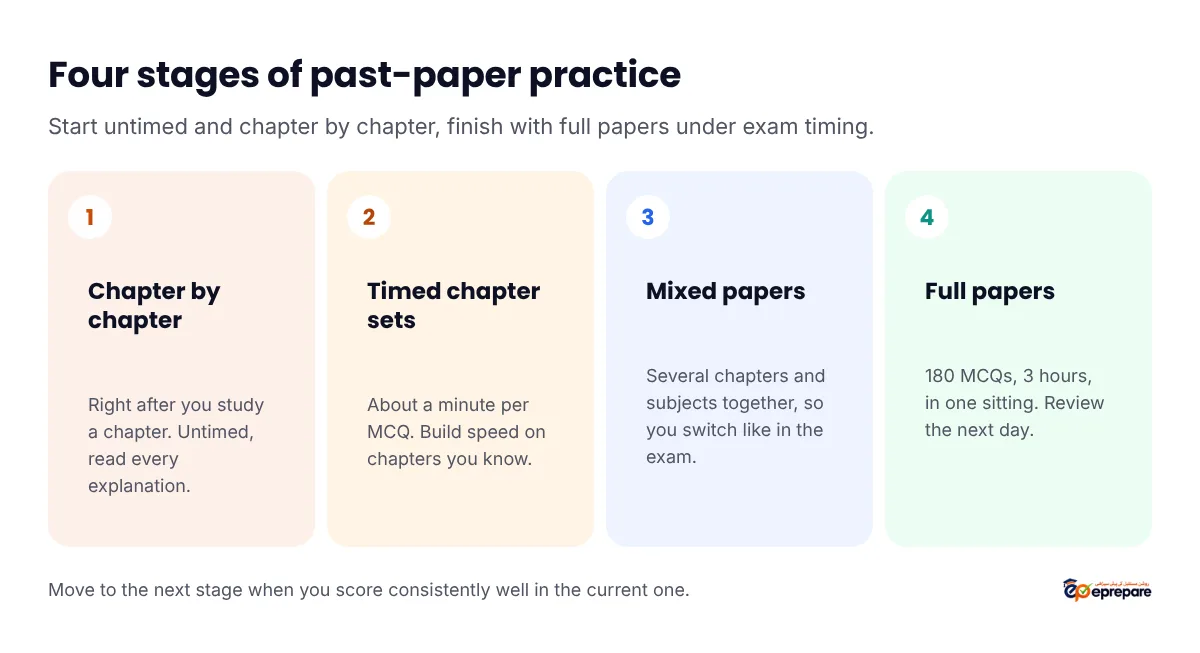
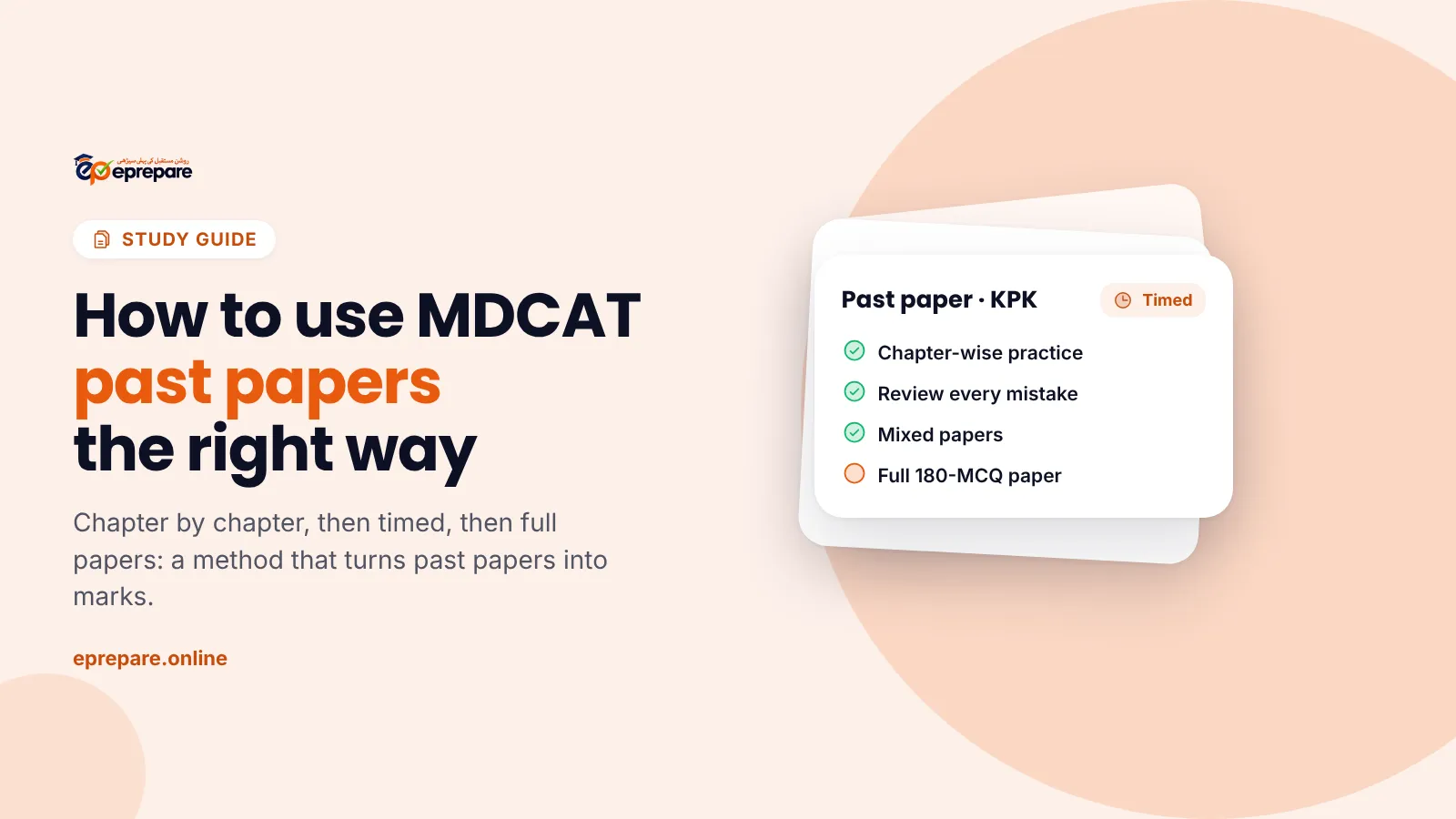
Stage 1: Chapter by chapter, from the first month
Do not wait until you finish the syllabus. As soon as you have studied a chapter, solve its past-paper MCQs, untimed, and read every explanation. Mark each mistake and go back to the textbook line it came from.
Stage 2: Timed chapter sets
Once a chapter is learned, practise its past-paper MCQs against the clock, at about a minute per question. This is where you build speed on material you already know.
Stage 3: Mixed papers
In the exam you jump from cell biology to organic chemistry to projectile motion in a few minutes. Mixed sets of several chapters and subjects train that switching, and show whether older chapters have faded.
Stage 4: Full papers under exam conditions
In the final two to three months, sit full-length papers: 180 MCQs, 3 hours, one sitting, phone in another room. Then spend real time reviewing: a paper you do not review teaches you very little.
How to review a past paper properly
The review is where the marks are. For every question you got wrong, or got right by guessing:
- Find why you missed it: did not know, forgot, misread, ran out of time, or guessed.
- Go back to the source: the textbook line, diagram or formula behind the question.
- Write one short note in your revision notebook, in your own words.
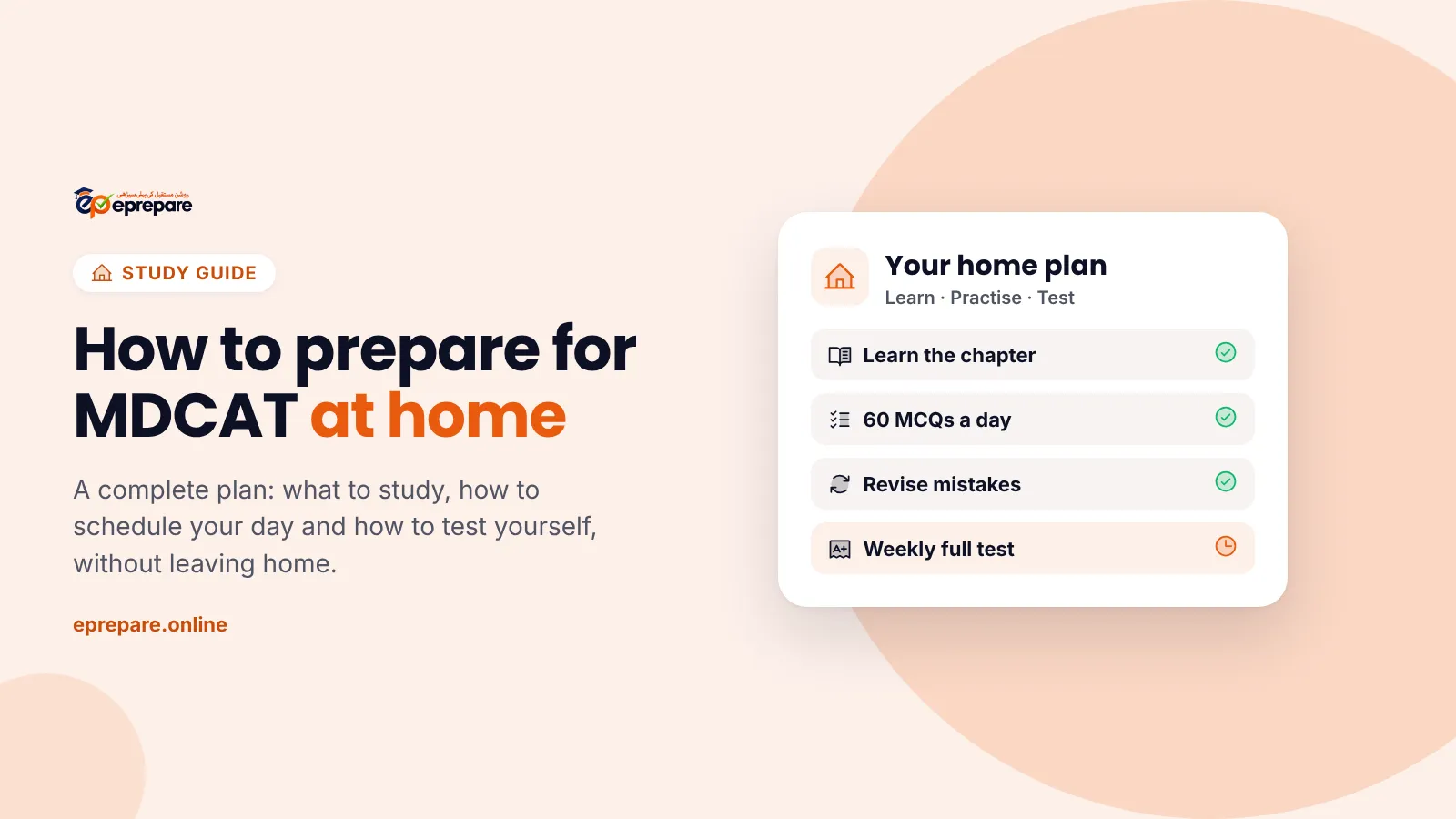
- Retest it a few days later. On ePrepare, wrong answers go to Wrong MCQs automatically, and smart revision brings them back on a schedule. See turning every mistake into marks.
Rule of thumb: spend at least as long reviewing a paper as you spent solving it. One hour of solving and five minutes of checking is the most common way students waste past papers.
KPK past papers: KMU and ETEA
If you are taking MDCAT in Khyber Pakhtunkhwa, the papers set for KPK are the closest to what you will face, so give them priority. On ePrepare, past papers are filed by province, so you can practise exactly the papers you want:
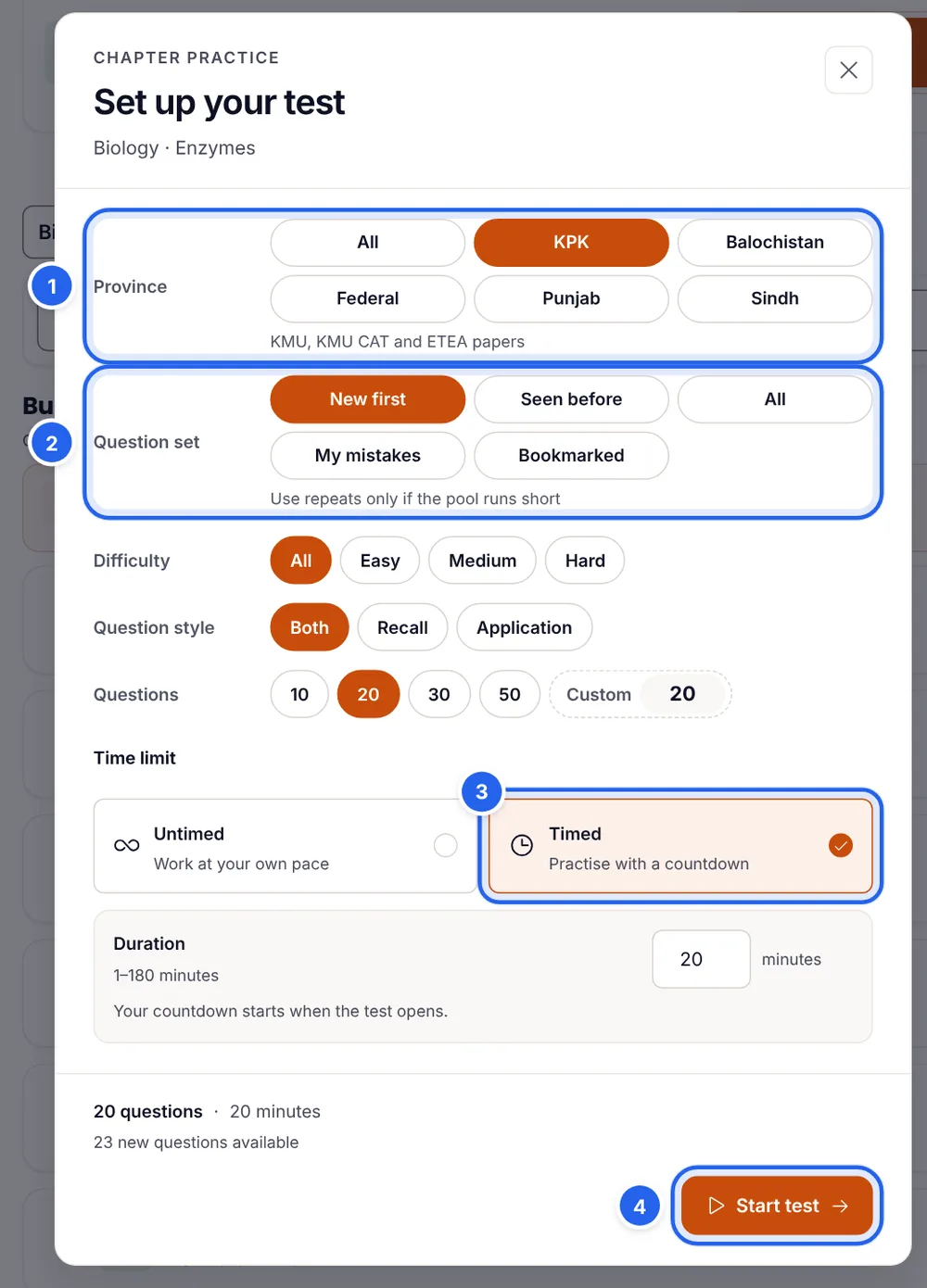
- Open Past Paper MCQs, choose a subject and a chapter, and press Chapter test.
- Under Province (1), choose KPK for KMU, KMU CAT and ETEA papers, or another province for theirs.
- Keep New first (2) so you meet questions you have not seen; switch to My mistakes for revision.
- Choose Timed (3) once you are past stage 1, and press Start test (4).
Papers from other provinces are useful too: they are written for the same PMDC syllabus and give you more variety. Federal, Punjab, Sindh and Balochistan papers are all available in the same place.
Older papers: what changed
MDCAT papers up to 2024 had 200 MCQs. The current pattern has 180 MCQs in 3 hours (see the MDCAT paper pattern). Older papers are still excellent practice for concepts and question style. Just remember that their length and subject balance differ, so use the current pattern for your full-length timing practice.
How many past papers should you solve?
There is no magic number, but a sensible target is:
- Every chapter's past-paper MCQs at least once in stages 1 and 2.
- A mixed set every week from the middle of your preparation.
- A full paper every one to two weeks in the last three months, and two a week in the final month.
Quality beats quantity: ten papers reviewed properly will do more for your score than thirty solved and forgotten.
Common mistakes with past papers
- Saving them for the end. Use them from the first chapter.
- Memorising answers. Learn the concept behind each answer; the wording will change.
- Only checking the score. The review is where the improvement happens.
- Skipping English and Logical Reasoning papers. They are 18 marks and improve fast with practice.
- Never practising under time. Untimed accuracy does not guarantee you can finish in 3 hours.
Frequently asked questions
Do MDCAT questions repeat from past papers?
Exact repeats are uncommon, but the same concepts and lines of the textbook come up again and again. That is why understanding past-paper questions matters more than memorising them.
Which past papers should KPK students practise?
Start with KPK papers (KMU and ETEA), then add papers from other provinces for variety. All follow the PMDC syllabus.
When should I start solving past papers?
From your first chapter, as chapter-wise practice. Leave full-length papers for the final two to three months.
Are old 200-MCQ papers still useful?
Yes, for concepts and question style. Use the current 180-MCQ pattern for full-length timing practice.
Where can I practise past papers online?
On ePrepare, past-paper MCQs are organised by subject, chapter and province, with an explanation for every question and timed or untimed tests.
Make past papers part of every week
Past papers work best as a habit, not a last-month panic. Start with the chapter you studied this week, review every mistake, and build up to full papers. Register on ePrepare to practise past papers by province, chapter and topic, with explanations, Wrong MCQs and full-length papers in one place.