Can you prepare for MDCAT at home, without joining a physical academy? Yes. Many of our own toppers did exactly that. What a good academy really gives you is not a building. It is structure: a syllabus to follow, a plan for every day, enough practice, regular tests and someone who tells you what to fix next. If you can bring those five things into your room, home preparation can work as well as any classroom, and it saves you hours of travel every day.
This guide is the complete plan. It covers what MDCAT tests, what you need before you start, how to split your months, what a study day at home looks like, and how to check that you are actually improving.
"Loved preparing from home. Lectures, revision MCQs and tests were all there whenever I needed them. It was still a lot of hard work, but at least I wasn't wasting half the day deciding where to study from."
Ajwa Mahboob, 177/180 in MDCAT 2026 (see all our toppers)
First, know what MDCAT tests
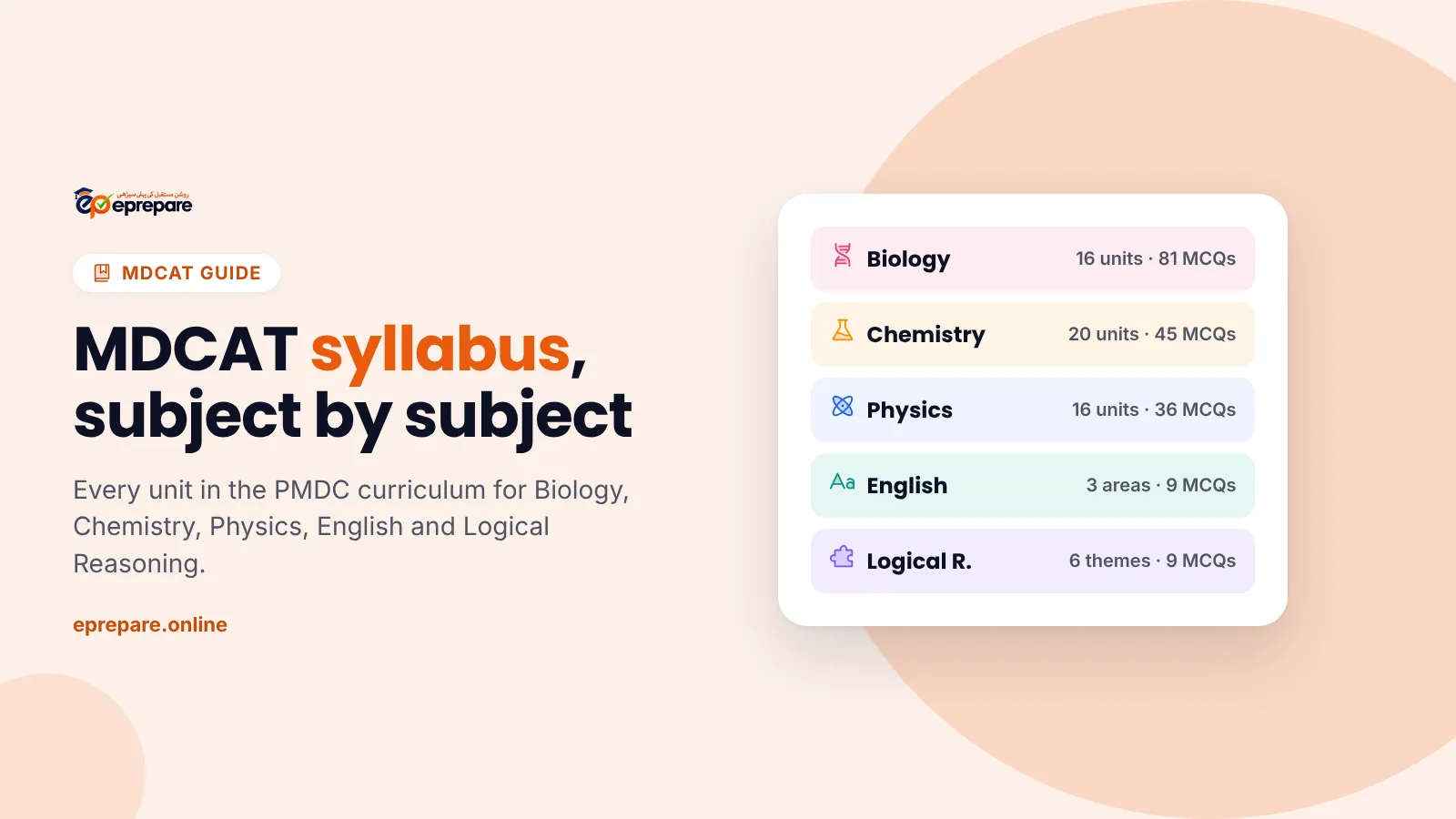
Everything in your plan comes from the paper itself. MDCAT follows the PMDC curriculum, and the paper looks like this:
| Subject | MCQs | Share of marks |
|---|---|---|
| Biology | 81 | 45% |
| Chemistry | 45 | 25% |
| Physics | 36 | 20% |
| English | 9 | 5% |
| Logical Reasoning | 9 | 5% |
| Total | 180 | 100% |
You get 3 hours, every question carries one mark, and there is no negative marking. Read the full breakdown in MDCAT paper pattern explained.
What this means for home study: Biology alone is almost half the paper, so it gets the biggest share of your time. But do not drop English and Logical Reasoning: 18 marks is often the difference between a government seat and a waiting list.
Step 1: Set a target score
A target turns "study hard" into a number you can measure. To qualify you need at least 55% (99 out of 180) for MBBS and 50% (90) for BDS, but qualifying is not the same as getting a seat. Open-merit seats in government medical colleges usually need 170 or more, together with strong FSc marks, so make 170+ your target.
Work out what you need with the aggregate calculator: enter your Matric and FSc marks and try different MDCAT scores. Read MDCAT passing marks for the full picture.
Step 2: Gather the right material, and nothing extra
Home students often waste the first month collecting PDFs. You need far less than you think:
- Your FSc textbooks. MDCAT questions come from textbook concepts. Many test a single line, figure or definition.
- The PMDC curriculum. It lists every topic and learning outcome that can be tested. Our guide to the MDCAT syllabus explains it subject by subject.
- A large, topic-wise question bank with explanations, so you can practise every topic straight after learning it.
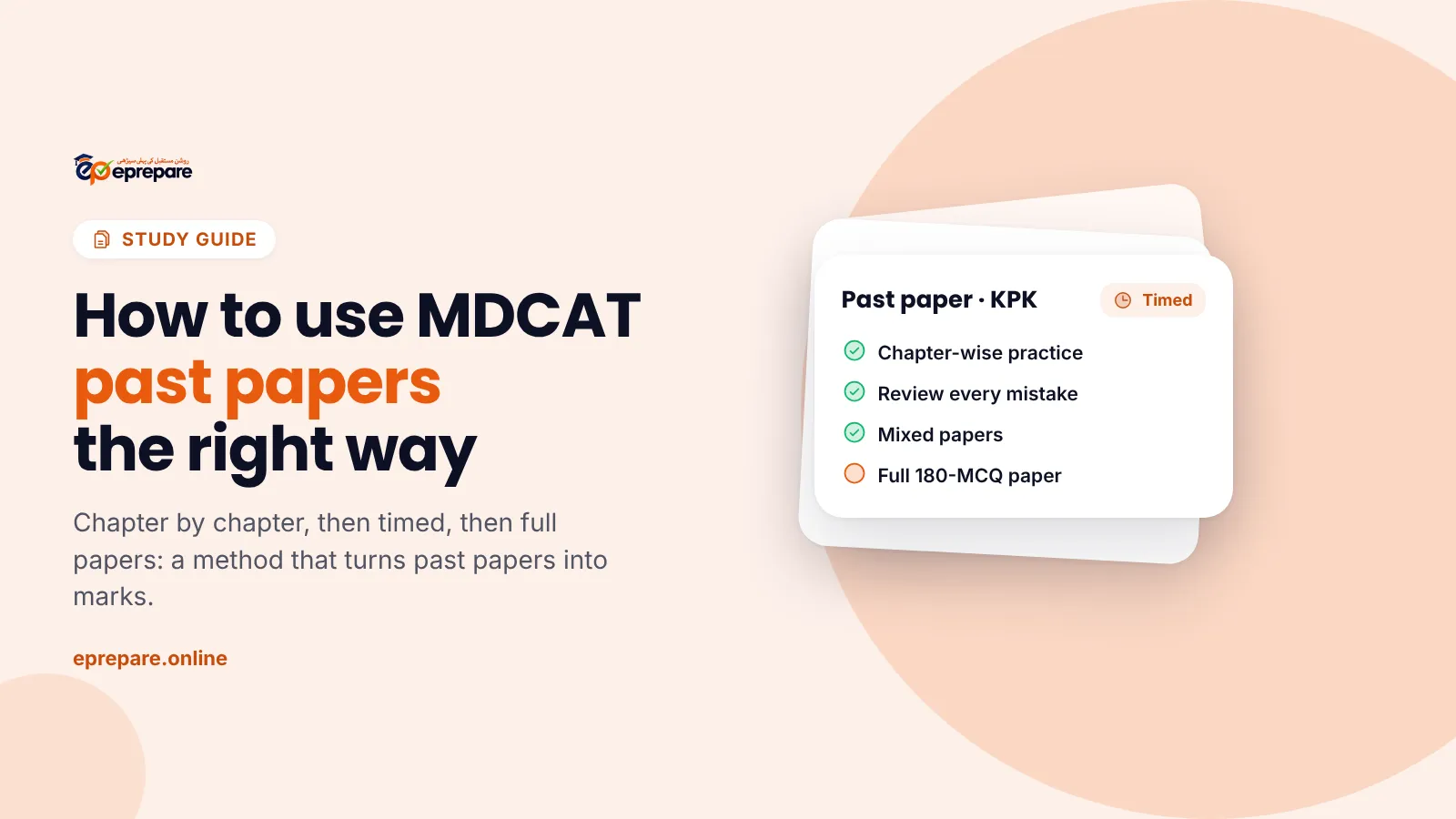
- Past papers, to see how examiners actually ask. See how to use MDCAT past papers.
- Full-length mock tests under real timing, from the middle of your preparation onwards.
- Lectures for the chapters you find hard, so you are never stuck on a concept for days.
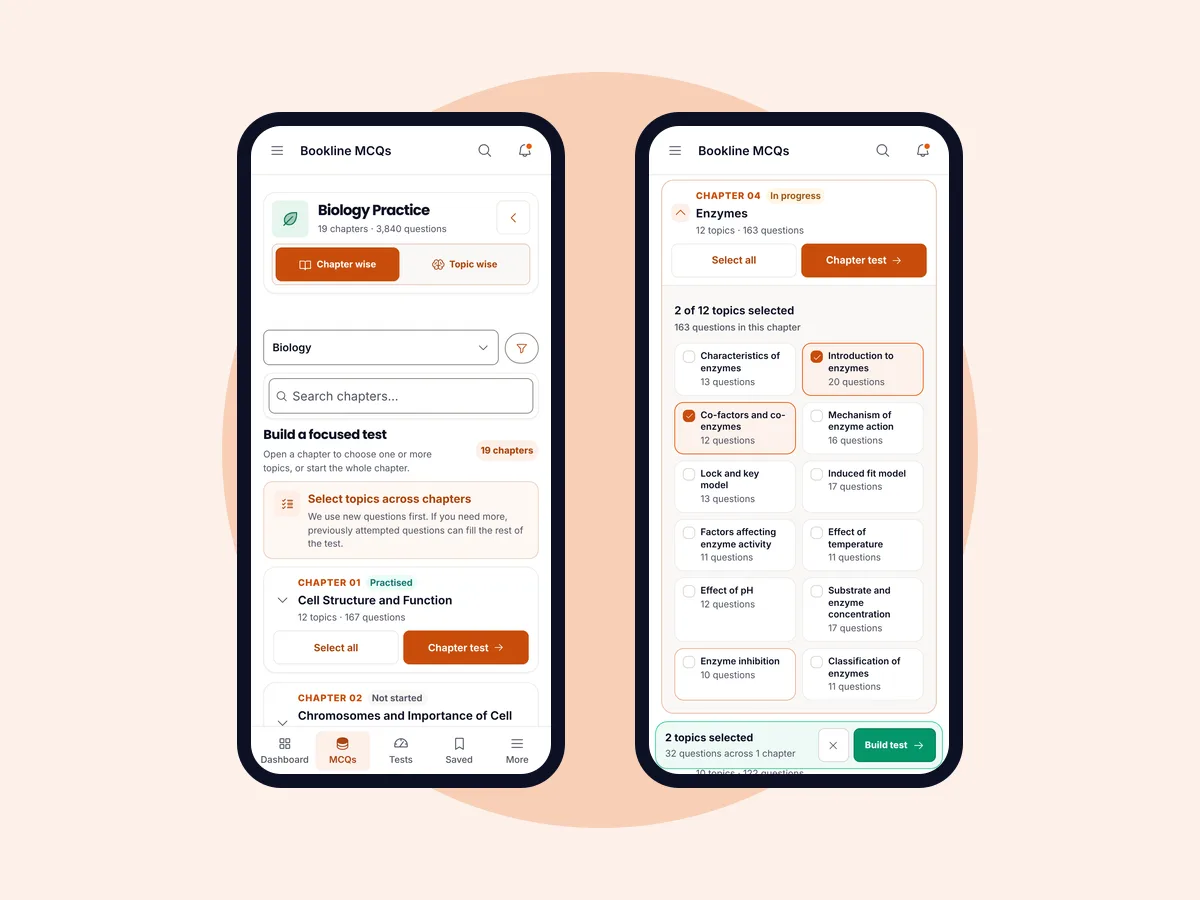
ePrepare puts all of this in one account: lectures, notes, Bookline MCQs that follow the textbooks line by line, a 50,000+ question bank, past papers and full-length papers. Whatever you use, the rule is the same: one main source per need, used properly.
Step 3: Split your time into three phases
Whether you have ten months or four, divide the time into three phases. The proportions matter more than the dates.
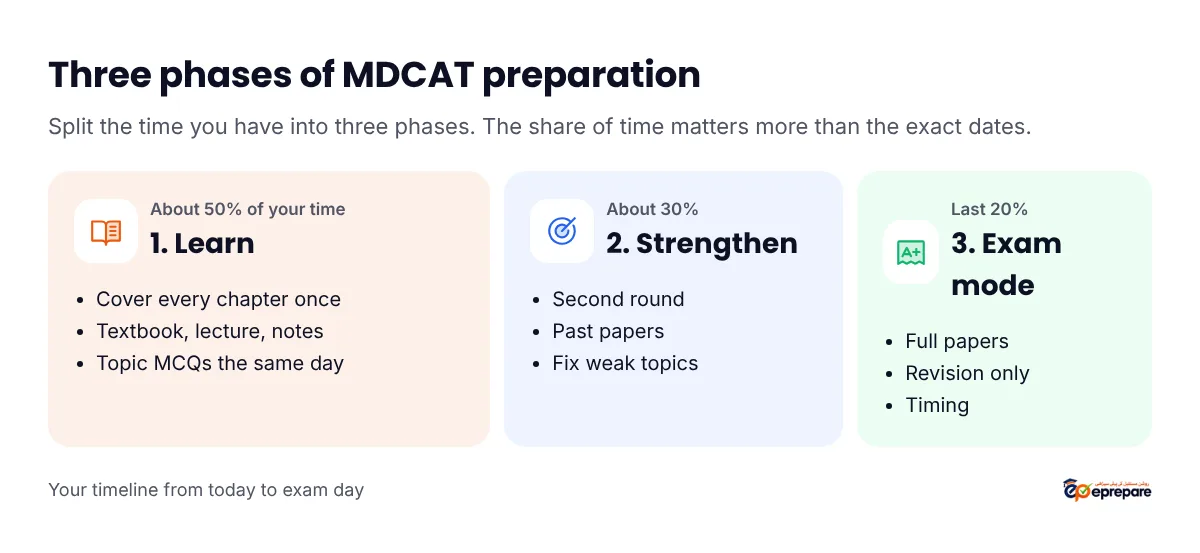
- Learn (about half your time). Cover every chapter once: textbook, lecture if needed, notes, then topic MCQs the same day. Do not wait to "finish the syllabus" before practising.
- Strengthen (about 30%). A second, faster round of the whole syllabus. Past papers chapter by chapter, and extra work on the topics your tests show are weak.
- Exam mode (the last 20%, usually the final six to eight weeks). Full-length papers under real timing, revision of mistakes and short notes. No new books.
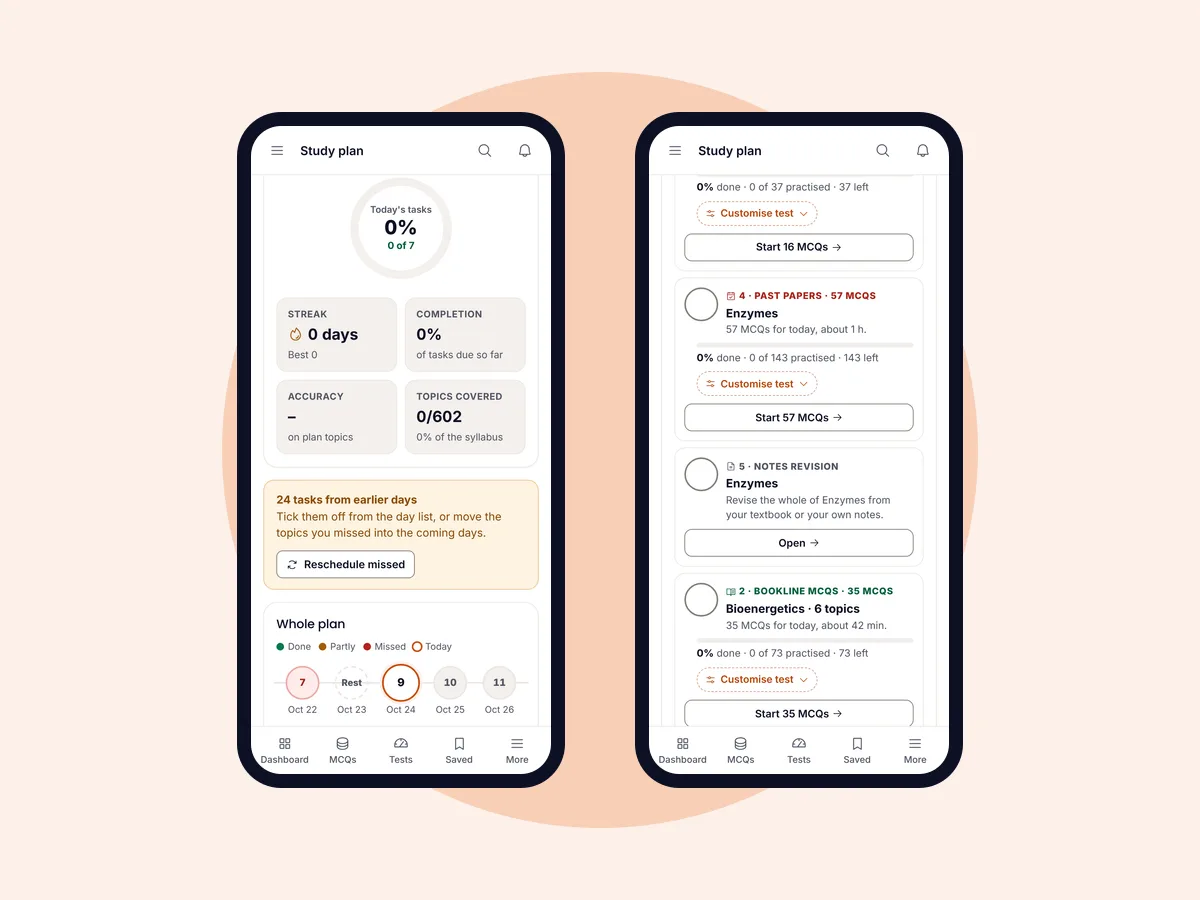
A study plan on ePrepare does this scheduling for you: tell it your exam date and daily hours, and it lays out topics, MCQs and revision days until the exam.
Step 4: Build a daily routine you can repeat
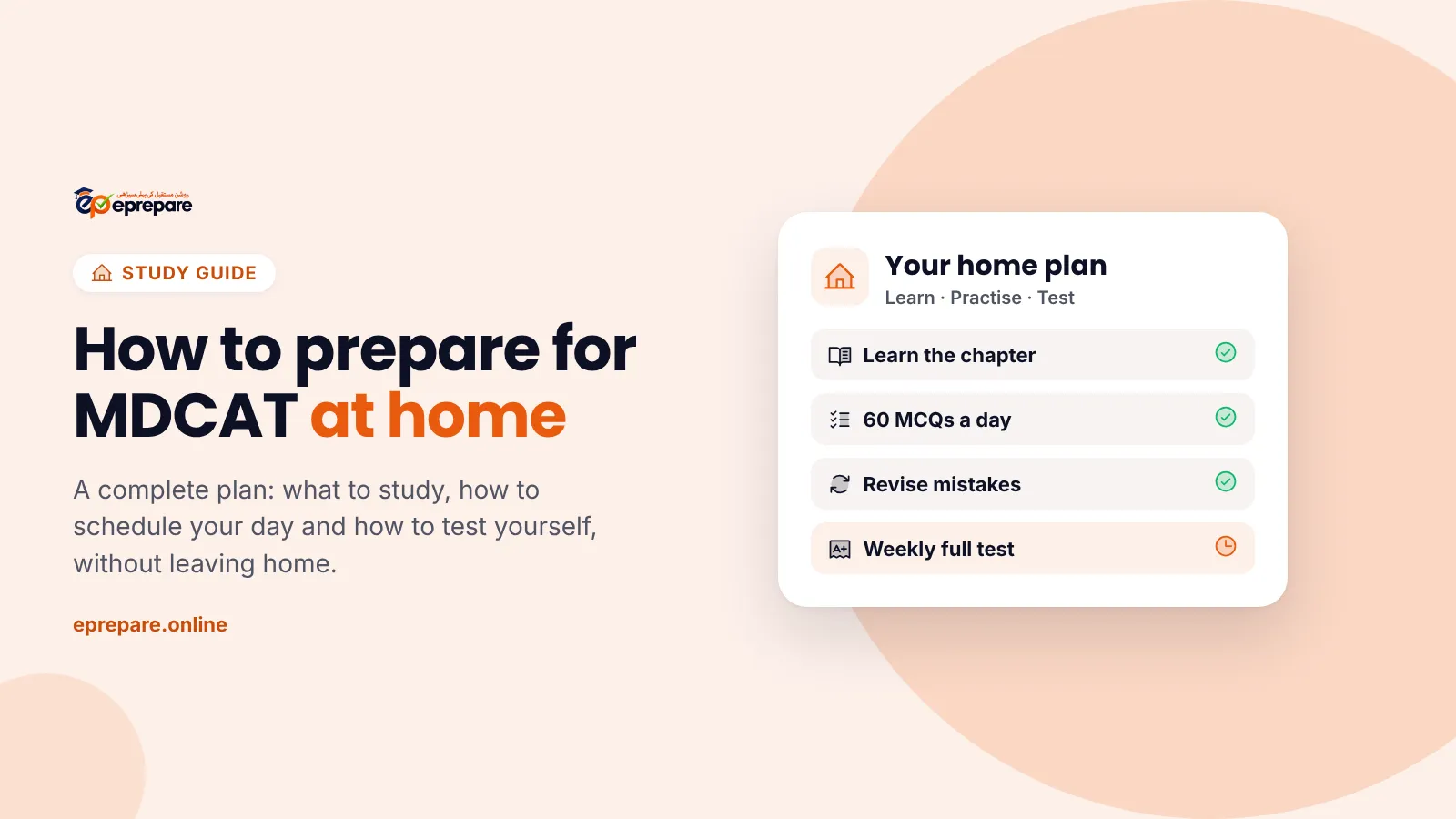
At home, nobody rings a bell. Your routine has to do that job. Here is a sample day of about seven to eight hours of real study:
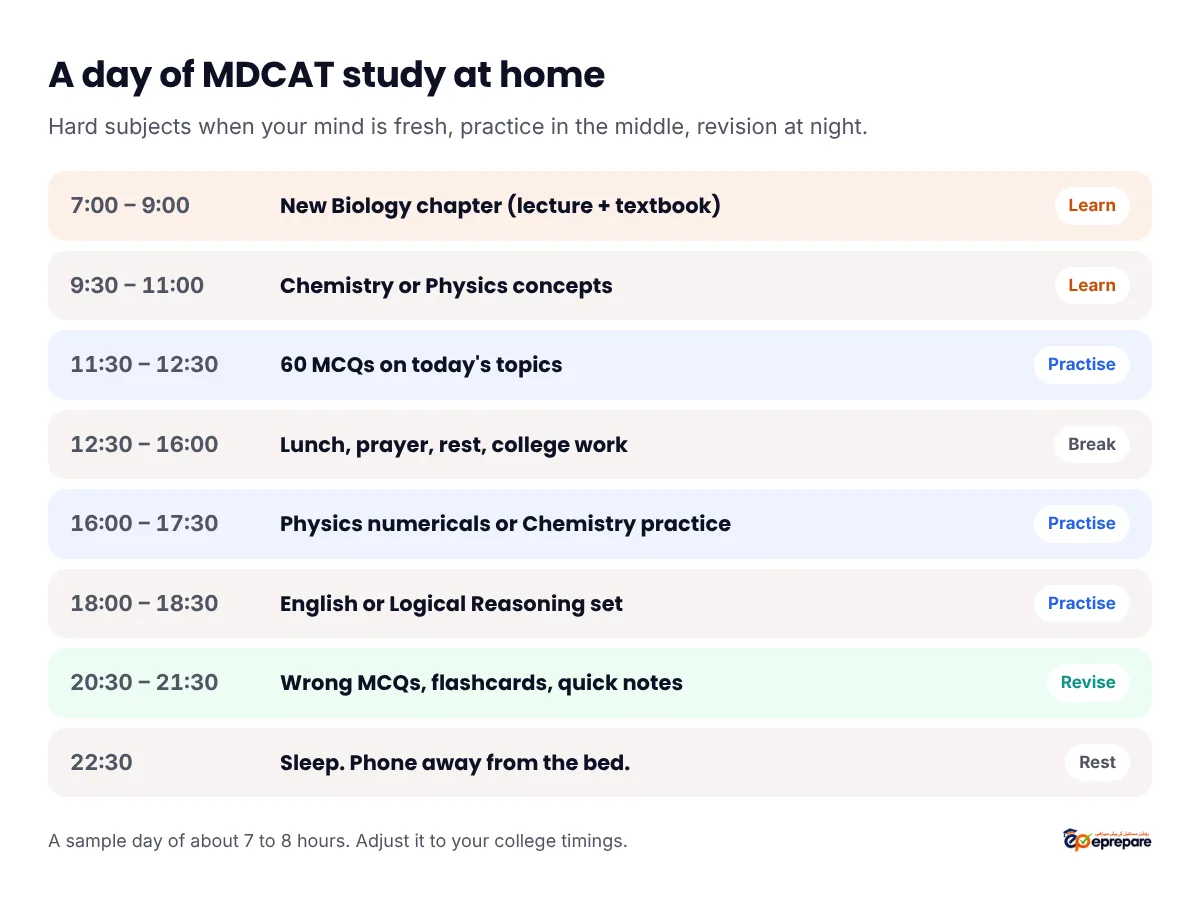
- Hardest work first. Learn new chapters in the morning, when your mind is fresh.
- Practise every day. Aim for 50 to 100 MCQs a day once the routine settles, more in the strengthen phase.
- Revise every night. Half an hour on today's mistakes stops them from becoming exam-day mistakes.
- Protect breaks and sleep. Seven to eight hours of sleep is part of preparation, not a reward after it.
Still in college? Do the morning block in the evening instead and keep the same order: learn, practise, revise.
Step 5: Learn each chapter the right way
For every chapter, follow the same loop:
- Read the textbook chapter (or watch the lecture first if the topic is new or difficult).
- Make short notes of definitions, numbers, exceptions and diagrams. Keep them small: they are your final-month revision.
- Test yourself the same day with 20 to 30 topic MCQs. This shows what actually stuck.
- Go back to the book for every mistake and find the exact line you missed.
Step 6: Practise in proportion to the paper
Split your weekly MCQs roughly like the paper: about 45% Biology, 25% Chemistry, 20% Physics and 10% English and Logical Reasoning together. If one subject is much weaker, give it extra time for a few weeks, then return to the normal split.
Two habits make practice count:
- Read the explanation for every MCQ, even the ones you got right. You may have guessed.
- Tag why you got it wrong: did not know, forgot, careless, ran out of time or guessed. The reason tells you what to fix. See turning every mistake into marks.
Step 7: Revise on a schedule
A chapter you studied in December will be half forgotten by May unless you see it again. Revise each topic a few days after learning it, then again a week later, then again a few weeks later. Spaced revision like this is the single biggest difference between students who "covered everything" and students who still remember everything on exam day.
Keep revision active: answer questions and flashcards instead of re-reading notes.
Step 8: Test yourself every week
Home students' biggest risk is not knowing where they stand. Fix that with tests:
- Weekly: a mixed test on everything covered so far.
- From the strengthen phase: a full-length 180-MCQ paper every one to two weeks, under a 3-hour timer.
- Final six weeks: two full papers a week, with a full day to review each one.
After each test, look at three things: your score trend, the subject losing the most marks, and the topics with the most mistakes. Your predicted MDCAT score on ePrepare tracks all three and tells you what to fix next.
Step 9: Make home a place where you can study
- One study place, used only for study, with your books and nothing else on the desk.
- Phone rules: notifications off during study blocks, social apps logged out until evening.
- Tell your family your timetable, so they know when not to disturb you.
- Talk to someone every week: a mentor, a teacher or a study partner. Preparing alone for months is hard, and getting stuck silently is how home students lose weeks.
Common mistakes home students make
- Collecting material instead of studying it. Pick your sources in the first week and stop searching.
- Watching lectures without practising. If you did not answer questions on it, you have not finished the topic.
- No fixed timetable. "I'll study all day" usually becomes three real hours.
- Avoiding tests until "ready". You become ready by testing.
- Ignoring English and Logical Reasoning. They are 18 easy-to-gain marks.
- Burning out in the first months. A steady seven hours a day beats twelve hours for two weeks and then nothing.
Frequently asked questions
Can I clear MDCAT without joining an academy?
Yes. What matters is structure: the full syllabus, a daily plan, plenty of MCQ practice, regular full-length tests and help when you are stuck. An online academy like ePrepare gives you all of that at home.
How many hours a day should I study for MDCAT at home?
Around six to eight hours of focused study suits most students, with more practice in the last months. Consistency every day matters more than very long single days.
How many MCQs should I solve every day?
Start with 40 to 60 a day while learning chapters, and build up to 100 or more in the strengthen phase. Always review the explanations, not just the score.
When should I start preparing?
The earlier the better. Starting eight to ten months before the exam gives you time for two full rounds of the syllabus and plenty of full papers. If you have less time, keep the three phases and shorten each one.
Is online preparation enough for MDCAT?
It is, if it covers lectures for hard topics, a large question bank with explanations, past papers, full-length tests and guidance.
Which subject should I start with?
Biology, because it carries 45% of the marks, alongside one of Chemistry or Physics so that you are always moving in two subjects at once.
Start your home preparation today
Pick today's first chapter, read it, and test yourself on 20 MCQs before you sleep. Then set up a plan for the months ahead. New to ePrepare? Register for MDCAT and get lectures, notes, Bookline MCQs, the question bank, past papers and full-length papers in one place, at home.