Every year, the same question fills our WhatsApp the week results come out: "Sir, I got 120. Did I pass?" The honest answer has two parts. Yes, 120 clears the MDCAT passing mark. But passing MDCAT and getting a medical seat are two very different things, and mixing them up is one of the most expensive mistakes a student can make while planning their preparation.
This guide gives you the official passing marks, shows what they really mean for admission, and helps you work out the score you should actually be aiming for.
MDCAT passing marks
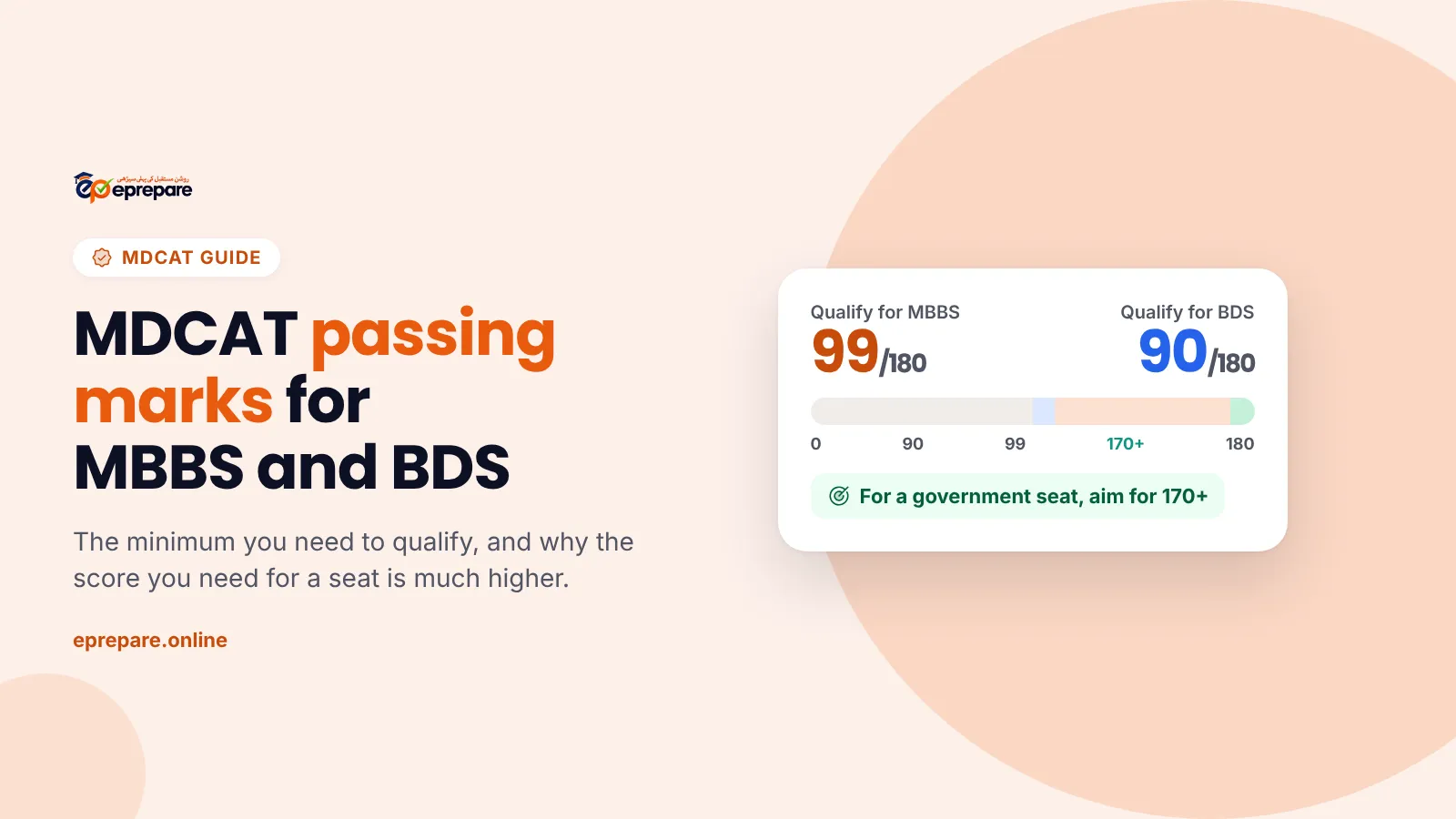
PMDC sets one national minimum for the 180-mark MDCAT paper:
| Programme | Minimum percentage | Marks out of 180 |
|---|---|---|
| MBBS (medical colleges) | 55% | 99 |
| BDS (dental colleges) | 50% | 90 |
Score 99 or more and you are eligible to apply to medical colleges; 90 or more makes you eligible for dental colleges. Score below the line and you cannot apply for that programme in that admission cycle, whatever your FSc marks are.
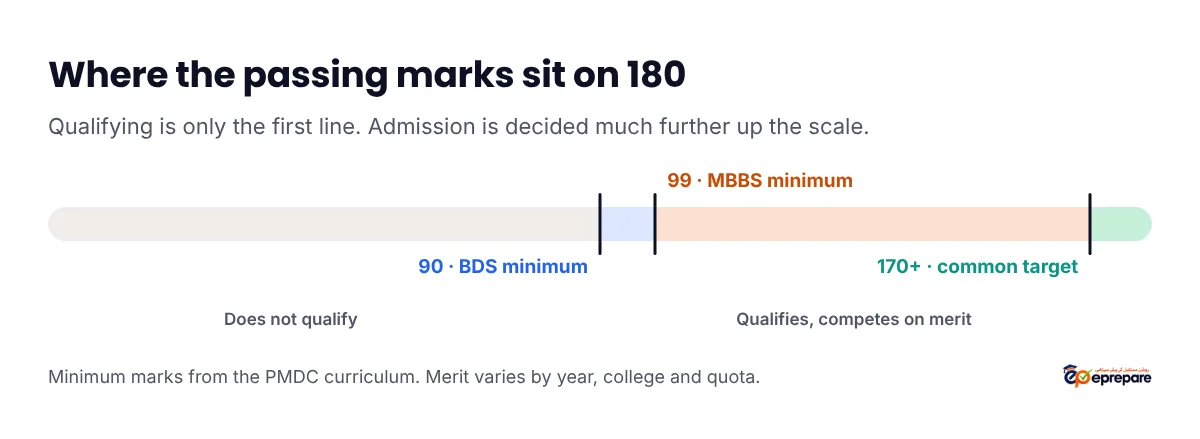
Passing is not the same as getting a seat
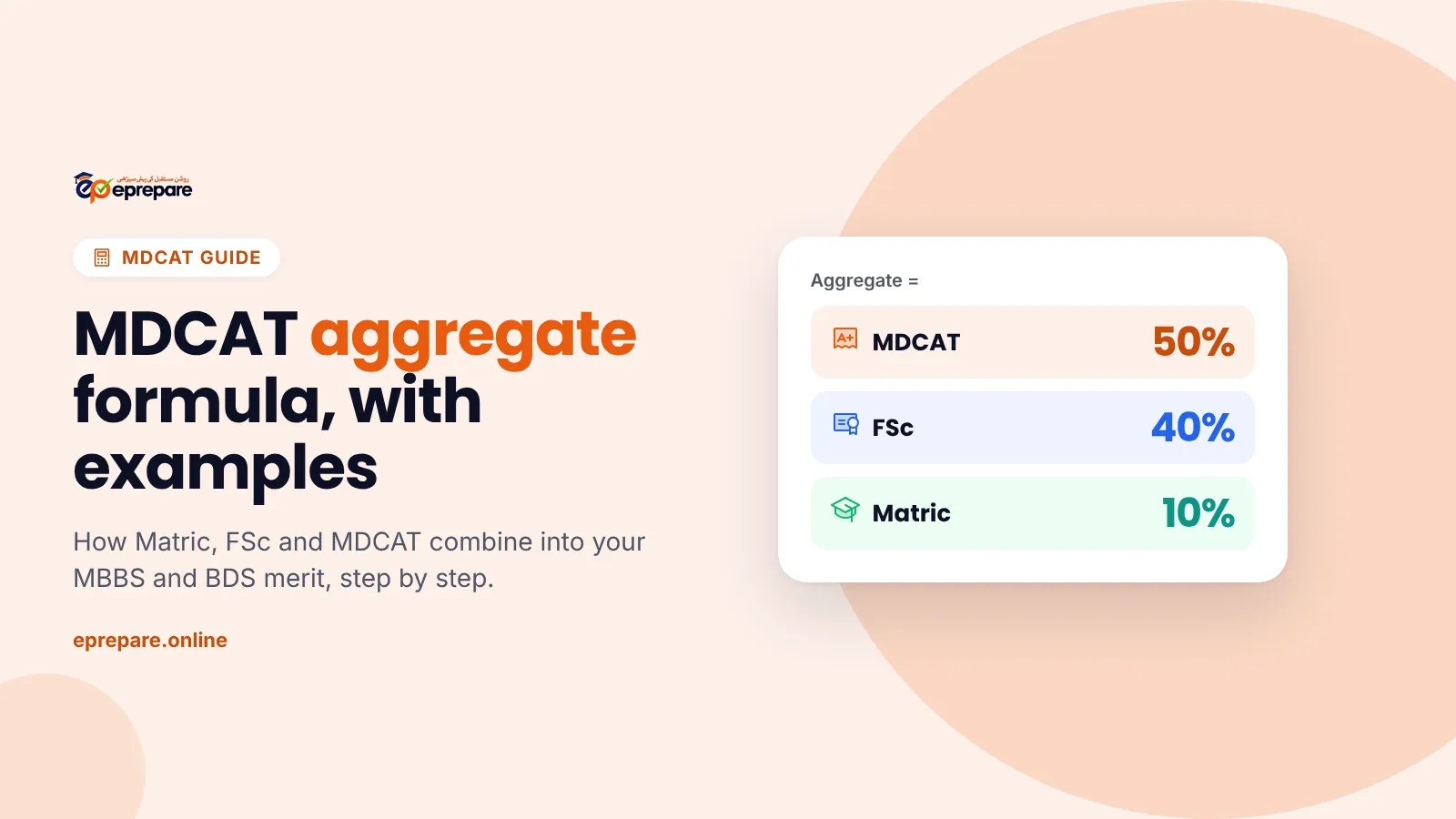
Admission is decided on aggregate, which in Khyber Pakhtunkhwa is 50% MDCAT, 40% FSc and 10% Matric. Here is what that does to a student who scores exactly the passing mark:
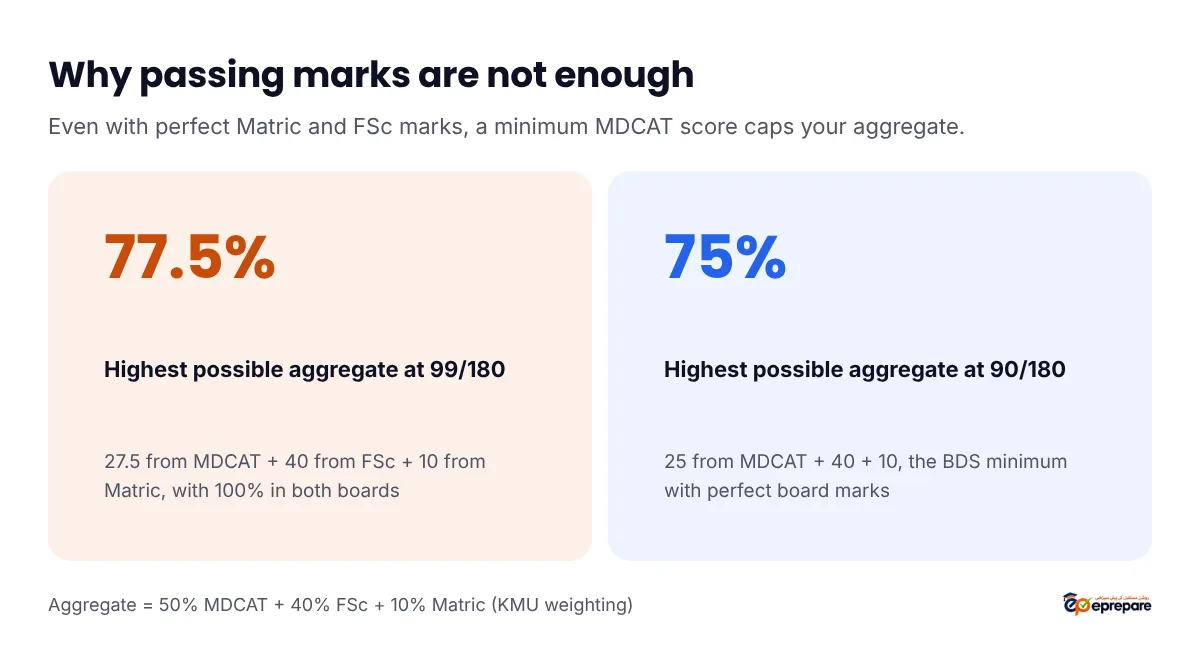
Even with 100% in both Matric and FSc, which nobody has, a score of 99 can never take you above a 77.5% aggregate. Government medical colleges close far above that. So treat 99 as a floor you must clear, and plan your preparation around a much higher target.
What score should you aim for?
There is no official "safe" score, because closing merit moves every year. It depends on how many seats there are, how many students apply, how hard that year's paper was and which quota you apply under. Still, a few things hold year after year:
- Open-merit MBBS seats in government colleges are the hardest to get. Students who get them usually have 170 or more in MDCAT and strong FSc marks. That is why we tell our students to make 170+ their target.
- Your FSc marks can make or break it. Because FSc is 40% of the aggregate, a student with 175 in MDCAT but weak FSc marks can still miss an open-merit government seat, while a classmate with 171 and excellent FSc marks gets in.
- Private medical colleges and BDS usually close lower than government MBBS, but still well above the passing mark.
To put numbers on it: in 2025-26, the last open-merit MBBS seat in a KPK government college closed at an aggregate of 93.11%, and early estimates for 2026-27 are around 93.94% or higher. With good board marks, that takes roughly 166 to 171 in MDCAT. The aggregate guide has every college's closing merit and the scores behind them.
The best way to set your own target is to work backwards from the aggregate you want. Put your Matric and FSc marks into the aggregate calculator and try different MDCAT scores until you see the number you need.
Quick sum: every MDCAT mark adds about 0.28 to your aggregate. Ten more correct MCQs is almost three aggregate points, often the gap between one college's merit list and the next.
Other minimums you must meet in KPK
MDCAT is not the only requirement. For KMU admissions in Khyber Pakhtunkhwa:
| Requirement | Public colleges | Private colleges |
|---|---|---|
| FSc (Pre-Medical) or equivalent | At least 65% | At least 60% |
| MDCAT for MBBS | At least 55% | At least 55% |
| MDCAT for BDS | At least 50% | At least 50% |
Check the current notice on KMU's admission sites before you apply: cas.kmu.edu.pk for public colleges and caspr.kmu.edu.pk for private colleges.
How long is an MDCAT result valid?
KMU's current admission sites accept MDCAT results from 2024, 2025 and 2026. In practice, though, an older result rarely helps much: if your score was not enough for the seat you wanted, the realistic way forward is a better score in the next MDCAT.
What if you scored below the passing marks?
It feels like the end of the world. It is not. Plenty of doctors took MDCAT twice. If you are planning another attempt:
- Find out where the marks went. Was it a knowledge gap, time, careless mistakes or nerves? Each needs a different fix.
- Do not restart from zero. You already know a lot. Spend your first weeks testing yourself to find the weak chapters.
- Follow a proper plan this time, with daily practice, regular revision and full-length papers. Our guide to preparing for MDCAT at home lays it out.
How to score well above the passing marks
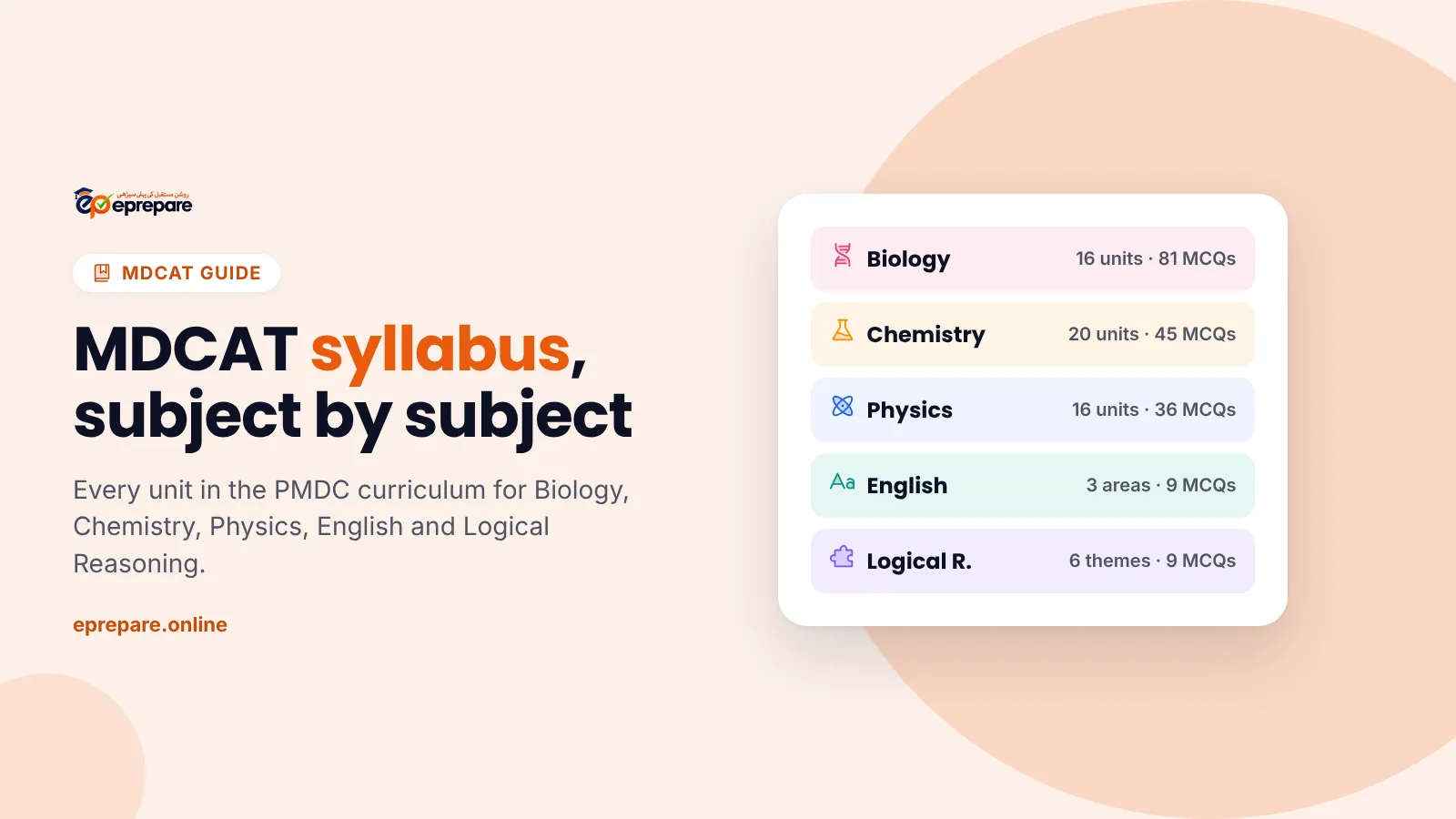
- Know the paper. Read the MDCAT paper pattern and give Biology the time its 81 marks deserve.
- Stay close to the textbook. Most questions are moderate and come straight from textbook concepts. See the MDCAT syllabus, subject by subject.
- Never leave a question blank. There is no negative marking.
- Test yourself regularly and watch your predicted score move towards your target.
Frequently asked questions
What are the passing marks of MDCAT for MBBS?
55%, which is 99 out of 180.
What are the passing marks of MDCAT for BDS?
50%, which is 90 out of 180.
Is 120 a good MDCAT score?
It clears the passing marks for both MBBS and BDS, but it is usually not enough for a government medical college. Use the aggregate calculator with your own board marks to see where it puts you.
What MDCAT score do I need for a government MBBS seat?
For open merit, usually 170 or more together with strong FSc marks. In 2025-26 the last government MBBS college in KPK closed at an aggregate of 93.11%, and about 93.94% or higher is expected for 2026-27. With weaker FSc marks, even 175 may not be enough. Private colleges usually close lower.
Can I get admission with passing marks only?
Passing makes you eligible to apply. Admission depends on your aggregate compared with other applicants, so a score just above the passing mark rarely leads to a government seat.
Are the passing marks the same in every province?
Yes, PMDC sets 55% for MBBS and 50% for BDS nationally. Admitting universities may add their own requirements, such as KMU's minimum FSc percentage.
Is there negative marking in MDCAT?
No, so attempt every question.
Aim higher than the line
Passing marks tell you the minimum. Your plan should be built around the score that gets you the seat you want. Set that target today, then start preparing on ePrepare with lectures, Bookline MCQs, past papers and full-length papers that show you, week by week, how close you are.