Ask ten seniors whether MDCAT is easy or difficult and you will hear ten different answers. One passed comfortably and says it was easy. Another scored 160 and still missed a government college, so to them it was brutal. Both are right, because they are answering different questions. This page gives you the honest, numbers-based answer: how many students actually pass, what score a government MBBS seat really takes, what makes the paper hard, what makes it manageable, and how to make it easier for yourself.
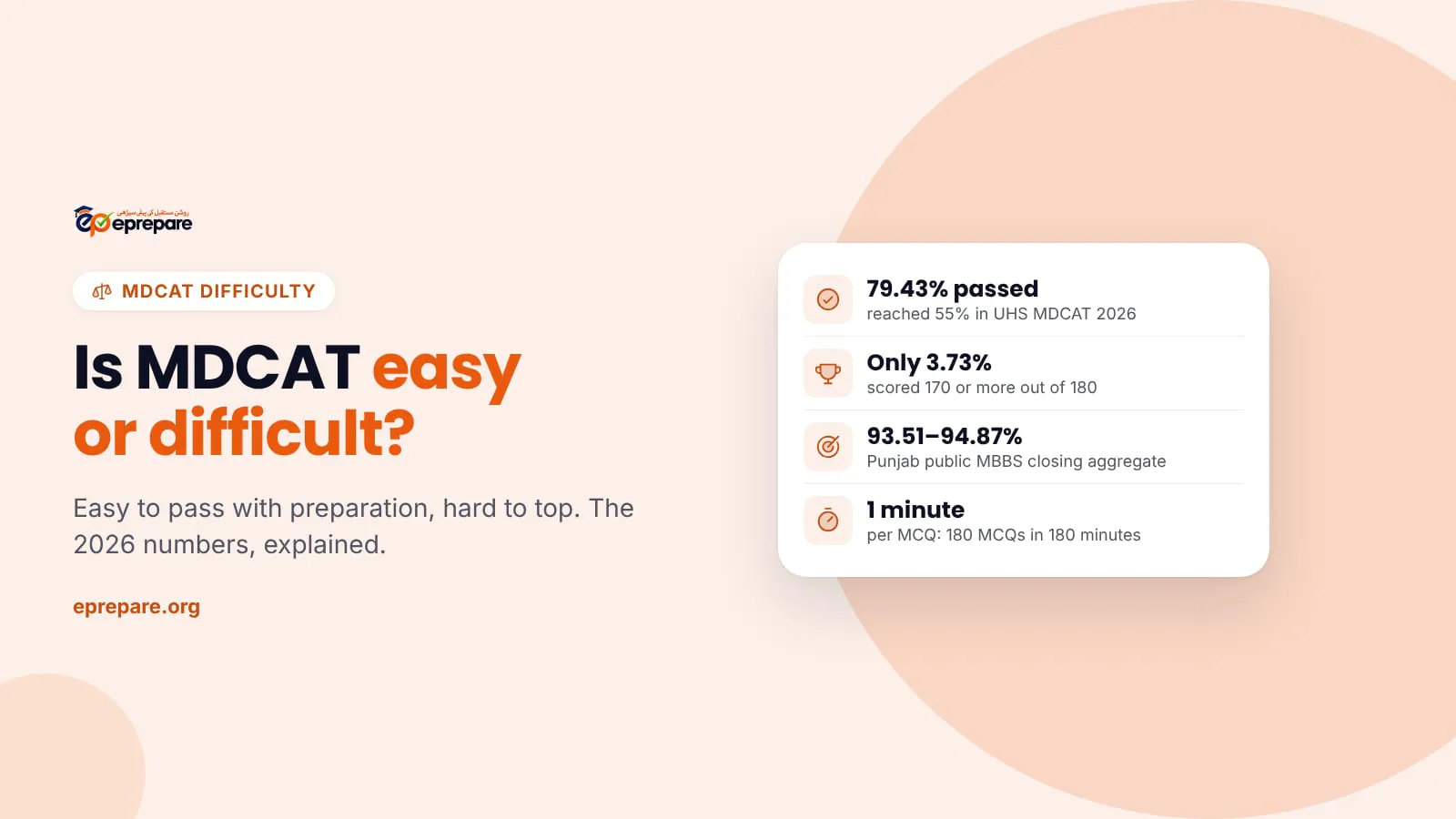
The short answer: MDCAT is not hard to pass if you prepare properly: in UHS's MDCAT 2026 result for Punjab, 79.43% of candidates reached the 55% (99/180) needed for MBBS. It is hard to score high enough for a government MBBS seat: only 3.73% scored 170 or more, and Punjab's public MBBS colleges closed at 93.51% to 94.87% aggregate in 2025-26, which for most students means about 173 to 178 out of 180.
Easy to pass, hard to top: two different questions
"Is MDCAT difficult?" really means one of two things. Is it hard to pass? Or is it hard to get the seat I want? The answers are very different. Here is how many of the 47,475 candidates who sat UHS's MDCAT 2026 in Punjab reached each score:
| Goal | Score out of 180 | Candidates who reached it | Roughly |
|---|---|---|---|
| Pass for BDS | 90 or more (50%) | 40,457 (85.22%) | more than 8 in 10 |
| Pass for MBBS | 99 or more (55%) | 37,708 (79.43%) | about 8 in 10 |
| A strong score | 150 or more | 14,714 (about 31%) | about 3 in 10 |
| A very strong score | 160 or more | 8,454 (about 17.8%) | fewer than 2 in 10 |
| Government MBBS range | 170 or more | 1,772 (3.73%) | fewer than 1 in 25 |
So passing is something most students who sit the test manage. A score in the 170s, where government MBBS merit usually sits, is something fewer than 1 in 25 manage. That gap is the whole story of MDCAT difficulty.
What the MDCAT 2026 results show
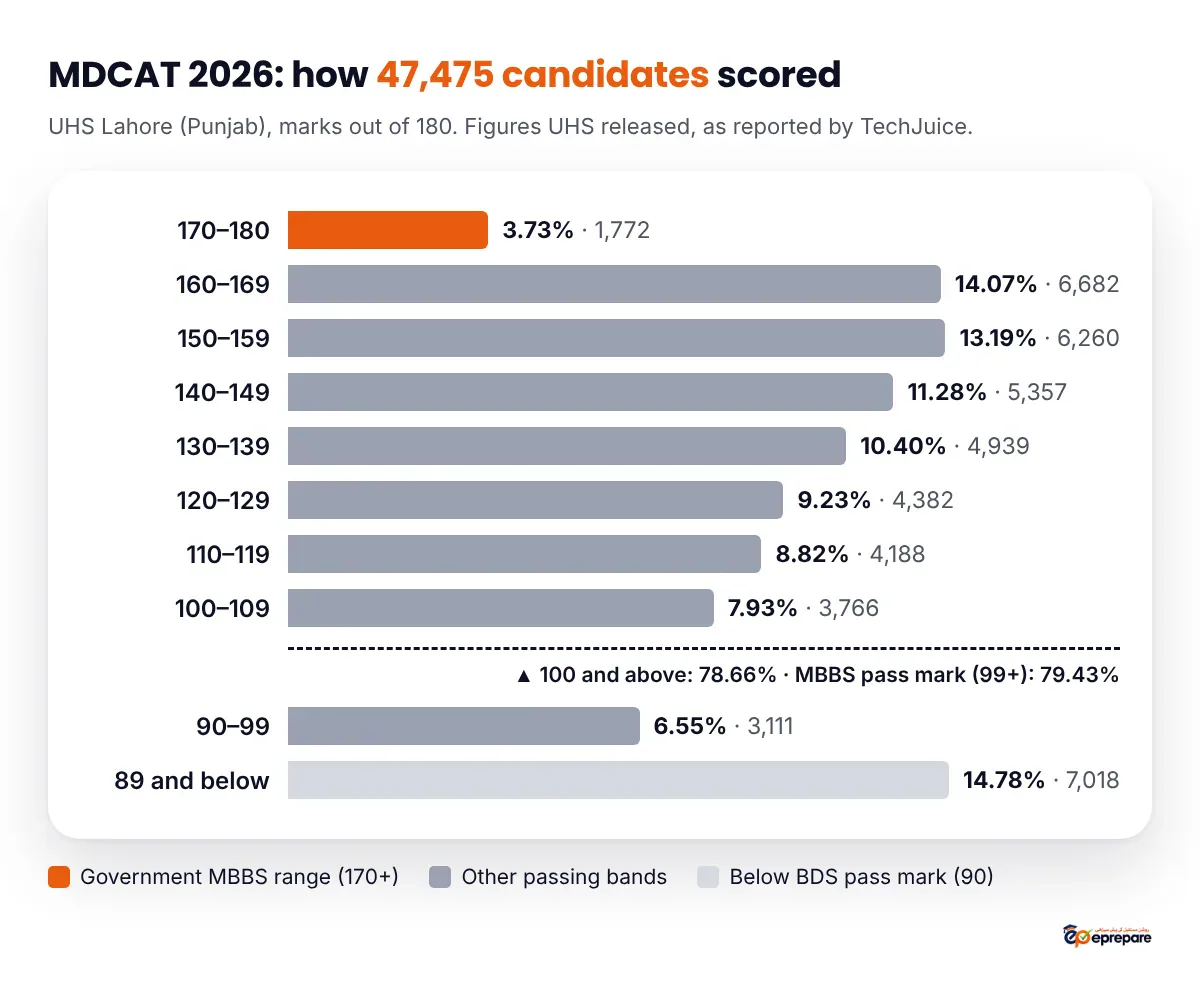
UHS Lahore conducted MDCAT for Punjab on 20 September 2026 and declared the result on 24 September. According to the figures UHS released (as reported by TechJuice), 49,202 candidates registered and 47,475 appeared. This is how their scores were spread:
| Score band | Candidates | Share |
|---|---|---|
| 170–180 | 1,772 | 3.73% |
| 160–169 | 6,682 | 14.07% |
| 150–159 | 6,260 | 13.19% |
| 140–149 | 5,357 | 11.28% |
| 130–139 | 4,939 | 10.40% |
| 120–129 | 4,382 | 9.23% |
| 110–119 | 4,188 | 8.82% |
| 100–109 | 3,766 | 7.93% |
| 90–99 | 3,111 | 6.55% |
| 89 and below | 7,018 | 14.78% |
Three things stand out. First, scores are spread across the whole range, so the paper separates students well; it is not a test everyone aces or everyone fails. Second, the largest band of all is "89 and below" (14.78%): about one candidate in seven did not reach even the BDS pass mark, so a pass is not automatic. Third, the 160–169 band is almost four times bigger than the 170+ band: many students get close to the top, and the last ten marks are the hardest to win.
What a government MBBS seat really takes
Seats are given by aggregate, not by MDCAT alone: MDCAT 50%, FSc 40% and Matric 10%. In 2025-26, UHS's final open-merit list shows the 17 public MBBS colleges in Punjab closing between 93.51% and 94.87% aggregate, with King Edward Medical University the highest at 94.8677%.
Worked example: Matric 95%, FSc 90%
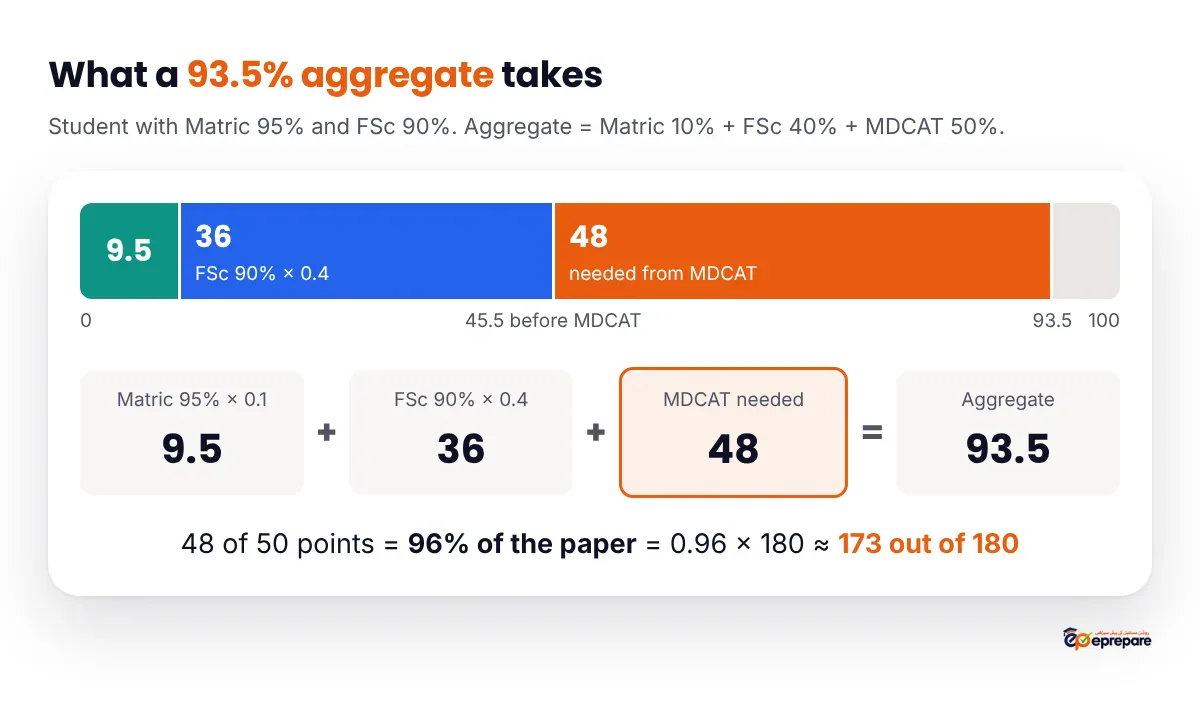
- Matric: 95% × 0.10 = 9.5 aggregate points.
- FSc: 90% × 0.40 = 36 points.
- Before MDCAT: 9.5 + 36 = 45.5 points.
- Needed for the lowest Punjab public college (93.51%): 93.51 − 45.5 ≈ 48 points from MDCAT.
- Turn points into marks: MDCAT is worth 50 points, so 48 ÷ 50 = 96% of the paper. 96% of 180 = 172.8, so the student needs 173 out of 180.
Check it: 173 ÷ 180 × 50 = 48.06, and 45.5 + 48.06 = 93.56%, just above 93.51%. With 172, the aggregate is 93.28%, just below. For King Edward Medical University (94.87%) the same student would need 178.
The score you need depends on your FSc
| Matric | FSc | Points before MDCAT | MDCAT needed |
|---|---|---|---|
| 98% | 95% | 47.8 | 165 / 180 |
| 95% | 90% | 45.5 | 173 / 180 |
| 92% | 88% | 44.4 | 177 / 180 |
| 90% | 85% | 43.0 | above 180, so not reachable |
This is why the same MDCAT score can mean a government seat for one student and not for another. Your FSc marks matter a lot: every 1% in FSc is worth 0.4 aggregate points, the same as about 1.4 MDCAT marks. Closing merit changes each year and differs by province and university, and a private college or BDS seat needs less. Use the merit calculator with your own marks, and see how to calculate MDCAT aggregate for each university's rules.
What makes MDCAT hard
- Competition. PM&DC reported 140,071 registrations for MDCAT 2025 for about 22,000 MBBS and BDS seats, and 138,158 registrations for MDCAT 2026. Your score is judged against everyone else's.
- Speed. 180 MCQs in 180 minutes is one minute per question, with no calculator. A Physics numerical that takes three minutes steals time from two Biology MCQs.
- Close options. Moderate and difficult MCQs often have two options that both look right. Half-learned concepts fall apart here.
- Breadth. Five subjects and the full two-year FSc syllabus, tested on one day. A weak chapter anywhere costs marks.
- The last ten marks. Going from 150 to 160 is hard work; going from 165 to 175 means almost no mistakes in 180 questions. That is where the top merit is decided.
- Pressure. It is a single sitting, once a year, and nerves cause careless errors.
What makes MDCAT manageable
- The syllabus is FSc level. PM&DC's uniform curriculum follows the intermediate books you already study, and some textbook topics are not included at all. See the full MDCAT syllabus.
- No negative marking. A wrong answer costs nothing more than a blank, so you can attempt every question. See MDCAT negative marking.
- Mostly moderate questions. PM&DC's rule is 15% easy, 70% moderate and 15% difficult: about 27 easy, 126 moderate and 27 difficult MCQs. Strong basics and steady practice cover most of the paper.
- A predictable pattern. 81 Biology, 45 Chemistry, 36 Physics, 9 English and 9 Logical Reasoning, the same structure in 2025 and 2026. You know exactly what to train for.
- Past papers show the style. Questions come from a PM&DC question bank (about 8,000 questions in 2026) built on the same syllabus, so practising past papers teaches you how questions are framed.
- A second chance exists. A result is valid for three years, and many students improve on a repeat attempt. See the repeaters guide.
How difficult is each subject?
Difficulty is personal, but these are the patterns most MDCAT students run into:
| Subject (MCQs) | What makes it tricky | How to handle it |
|---|---|---|
| Biology (81) | The most content: many facts, terms and diagrams, and options that differ by one word | Read the textbook line by line, then practise MCQs on every topic. It is 45% of the paper, so it decides your score. High-yield Biology chapters |
| Chemistry (45) | Three kinds of question in one subject: numericals (moles, gases, equilibrium), organic reactions, and inorganic trends | Learn reactions as patterns, not lists; practise quick mole and gas calculations. High-yield Chemistry chapters |
| Physics (36) | Many students find it the hardest: concept questions plus numericals solved without a calculator, under time pressure | Understand each formula's meaning and units, and practise numbers that cancel cleanly. High-yield Physics chapters |
| English (9) | Grammar and vocabulary that FSc does not drill in MCQ form | A short daily set of grammar MCQs is enough. MDCAT English grammar topics |
| Logical Reasoning (9) | Unfamiliar at first: series, deductions, cause and effect | It is learnable; a few weeks of practice makes the question types familiar. Logical reasoning question types |
Who finds MDCAT hardest?
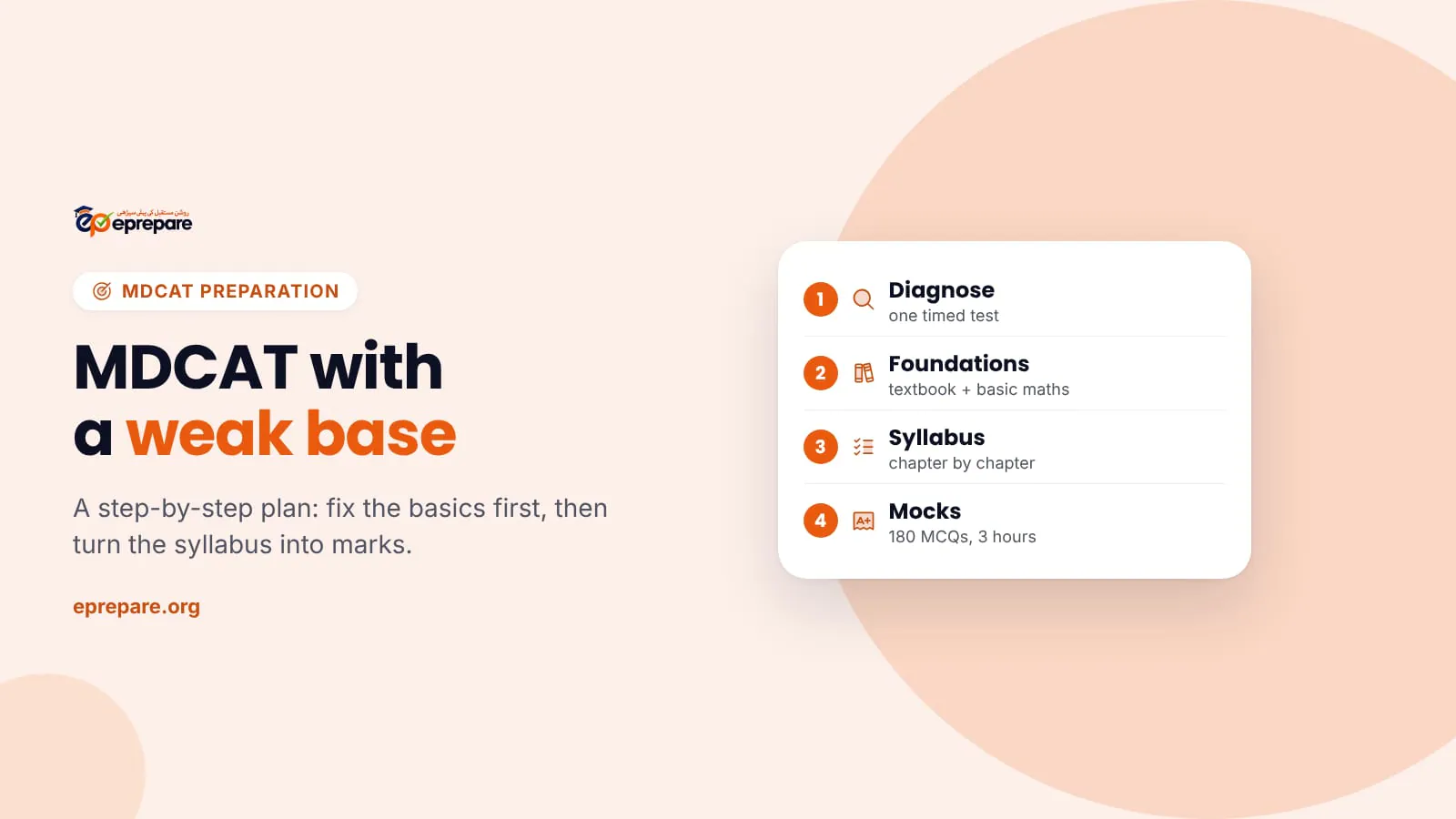
- Students with a weak FSc base. If first-year concepts never clicked, MDCAT feels like a new syllabus. It is fixable, but start early: how to prepare with a weak base.
- Late starters. Two months is enough to pass for many students, but rarely enough for a 170+. See MDCAT preparation in 2 months if that is you.
- Readers who do not test. Reading notes feels productive, but MDCAT rewards answering MCQs fast and accurately. Students who skip timed practice are surprised on test day.
- Slow test-takers. Knowing the answer is not enough if it takes two minutes. Speed comes only from full-length practice: see MDCAT time management.
- Students who ignore their mistakes. The same wrong concept, repeated across many MCQs, quietly costs ten or twenty marks.
How to make MDCAT easier with ePrepare
You cannot change the competition, but you can remove most of what makes the paper feel hard: gaps, slowness and repeated mistakes. This is how ePrepare students do it.
1. Know your real score, and what to fix next
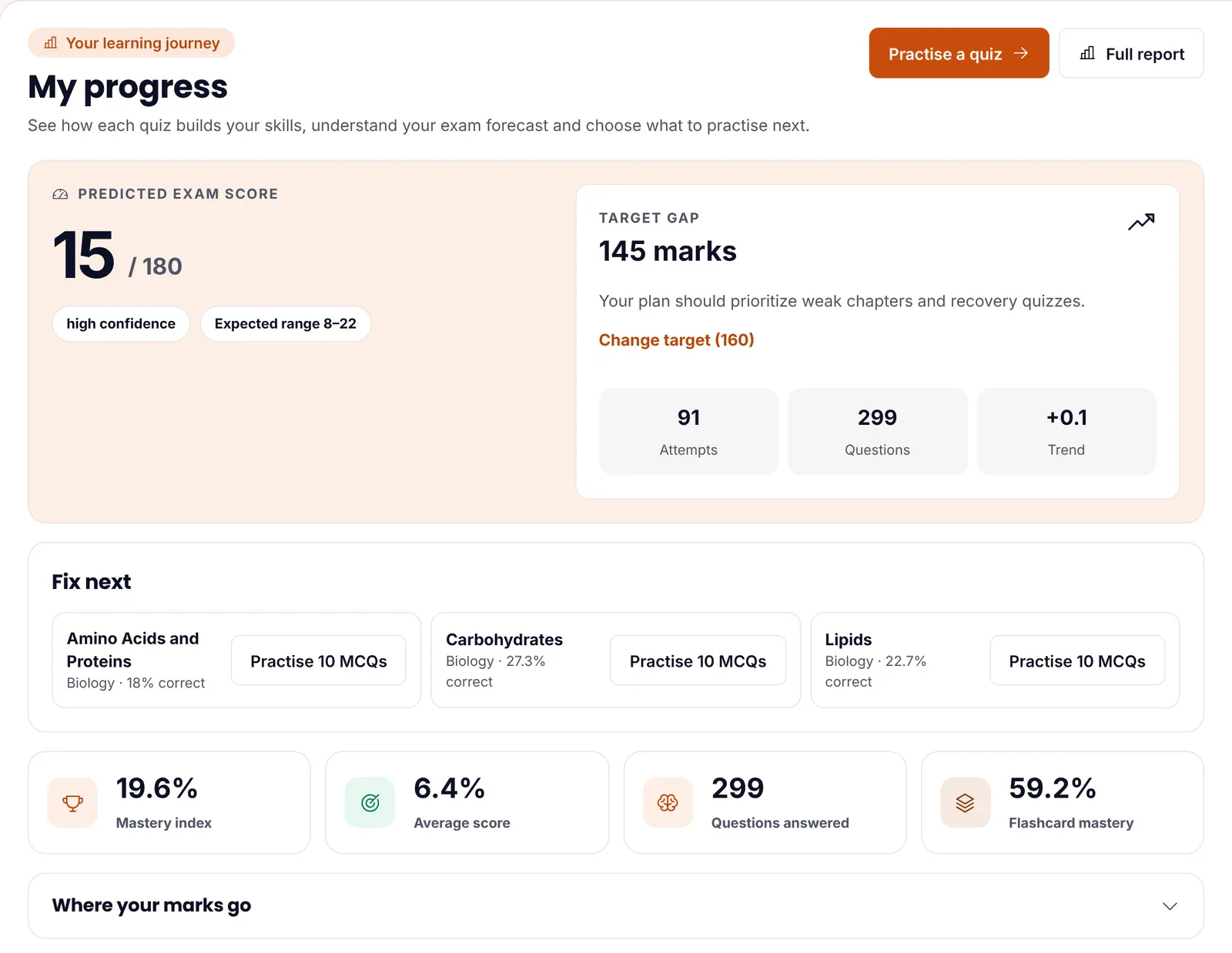
Guessing where you stand is stressful. ePrepare's score predictor turns your practice into a predicted MDCAT score out of 180, shows the gap to your target and lists the topics to "Fix next", each with a 10-MCQ practice set.
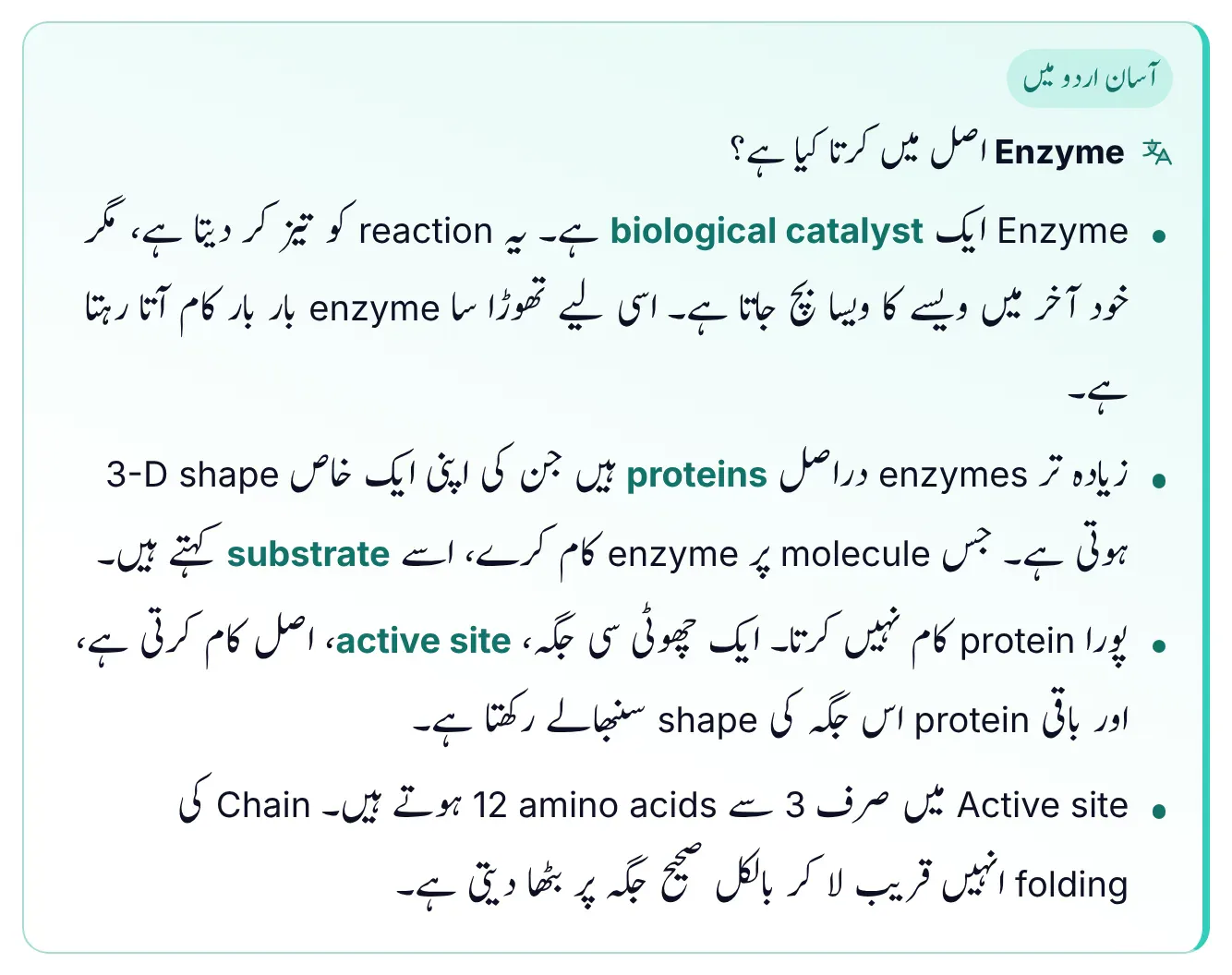
2. Understand concepts, in English and easy Urdu
Close options only feel hard when the concept is shaky. ePrepare's conceptual notes cover 63 chapters with more than 2,300 easy-Urdu explanation boxes (science terms kept in English), 850+ diagrams and 6,000+ practice MCQs inside the lessons. Every MCQ in the question bank also comes with an English and Urdu explanation and a hint.
3. Never make the same mistake twice
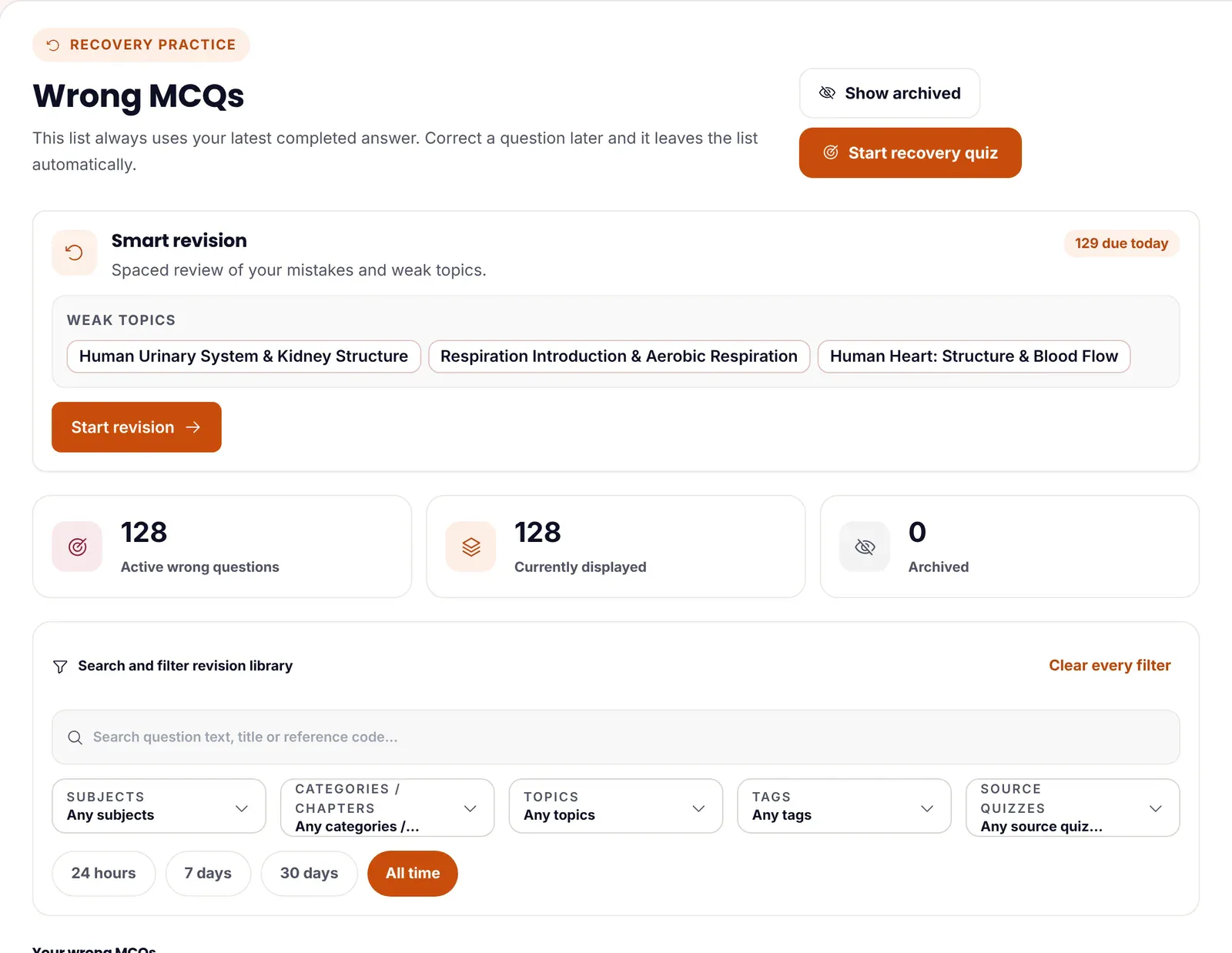
Every MCQ you get wrong is saved in Wrong MCQs, and smart revision brings it back on a spaced schedule until you get it right. Your weak topics are listed so you can revise them directly.
4. Build speed with full-length papers
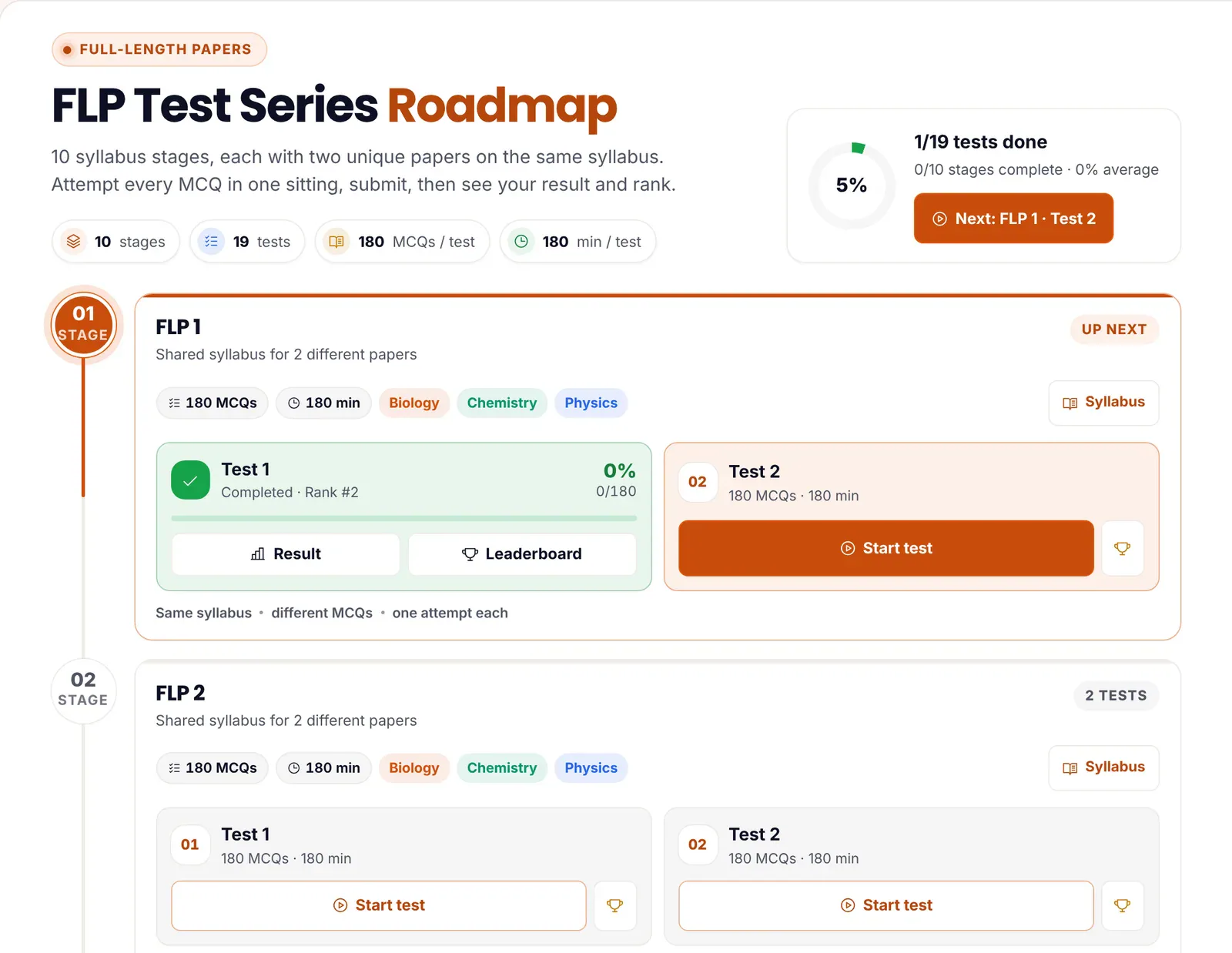
The one-minute-per-MCQ pace only becomes natural after you have sat full papers. ePrepare's FLP series gives full 180-MCQ, 180-minute papers in 10 syllabus stages, two different papers per stage, with your result, rank and leaderboard after each one.
Remember this: MDCAT is hard mainly for students who leave gaps, never practise under time, or repeat the same mistakes. Fix those three, and passing becomes routine and a high score becomes realistic.
A realistic way to think about your target
- Work out your target score from your Matric and FSc marks with the merit calculator, using last year's closing merit for the college you want.
- Take a baseline test now to see where you stand. A low first score is normal; what matters is the trend.
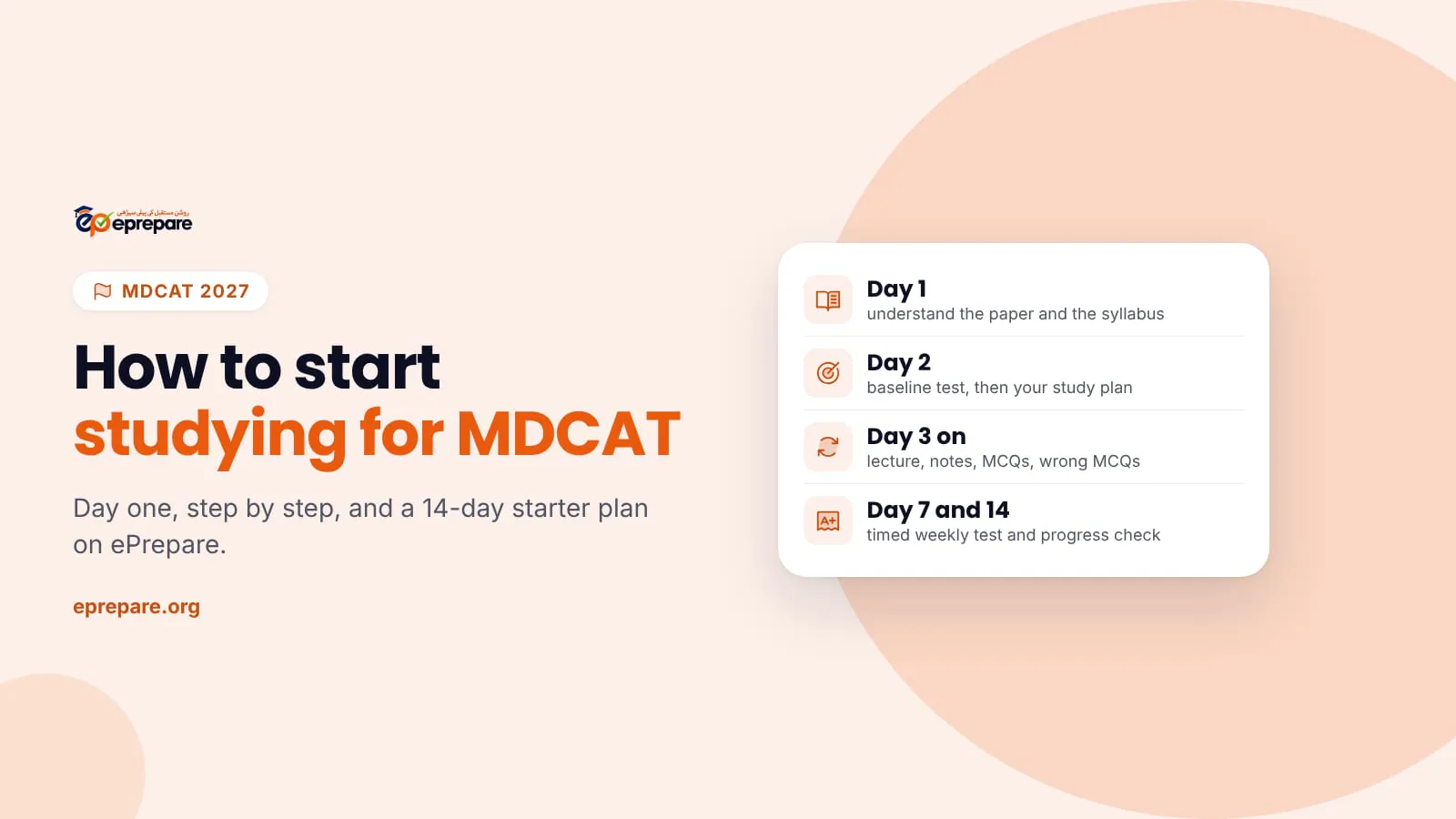
- Give yourself time. Six months or more of steady work leaves room to cover the syllabus, revise it and sit full papers. The MDCAT preparation guide has plans for every timeline, and how to start studying for MDCAT covers your first two weeks.
- Measure every week with a timed test, and move to full-length papers as you finish each stage of the syllabus.
ePrepare reports 200+ top positions and 1,000+ students above 165 in its 2026 results. If you want the same tools, compare the ePrepare packages or register for MDCAT 2027.
Frequently asked questions
Is MDCAT hard to pass?
Not for a student who prepares. In UHS's MDCAT 2026 result, 79.43% of candidates reached the 55% (99/180) MBBS pass mark and 85.22% reached the 50% BDS mark. Passing makes you eligible; it does not guarantee a seat.
What score do I need for a government MBBS seat?
It depends on your Matric and FSc marks. Punjab's public MBBS colleges closed between 93.51% and 94.87% aggregate in 2025-26. A student with Matric 95% and FSc 90% needed about 173/180 for the lowest of these and 178 for the highest.
Is MDCAT harder than FSc?
The content is FSc level, but the test is harder in a different way: 180 MCQs in 3 hours, close options and competition for seats. Students who did well in FSc by memorising often need to practise applying concepts quickly.
Which MDCAT subject is the hardest?
Many students find Physics hardest because of numericals without a calculator. Biology matters most, though: with 81 MCQs it is 45% of the paper, so it decides most scores.
Can an average student clear MDCAT?
Yes. An average student who covers the syllabus, practises MCQs daily and sits timed tests can pass, and with enough time and steady practice many push their scores far higher. Start early and follow a plan.
Is 150 a good MDCAT score?
150 put a candidate in roughly the top 31% of UHS's MDCAT 2026 result, comfortably above the pass mark. It is usually not enough for a Punjab government MBBS college; whether it is enough for a private college or BDS depends on your aggregate and that year's merit.
Sources: UHS's MDCAT 2026 result (as reported by TechJuice): registered and appeared candidates, pass rates and score bands; UHS final open-merit list 2025-26 (closing merit of Punjab public MBBS colleges); PM&DC: new syllabus for MDCAT 2025 (pattern, difficulty, passing marks); PM&DC press releases on MDCAT 2025 and 2026 registrations, seats and question bank; PM&DC admissions regulations 2026 (aggregate weighting).